A metaphysical ballet. The premiere of “The Little Prince” by Radu Poklitaru is coming in October — online
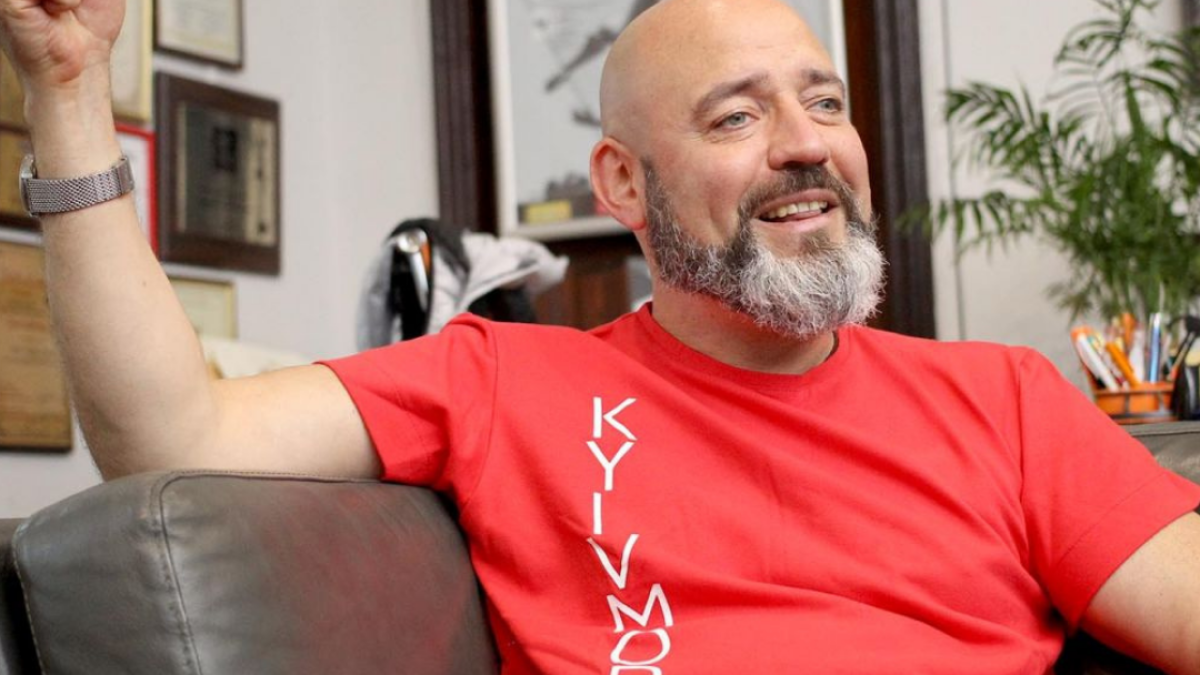
One of the most popular and decorated contemporary choreographers in Ukraine shared with Focus the details of his new large-scale production.
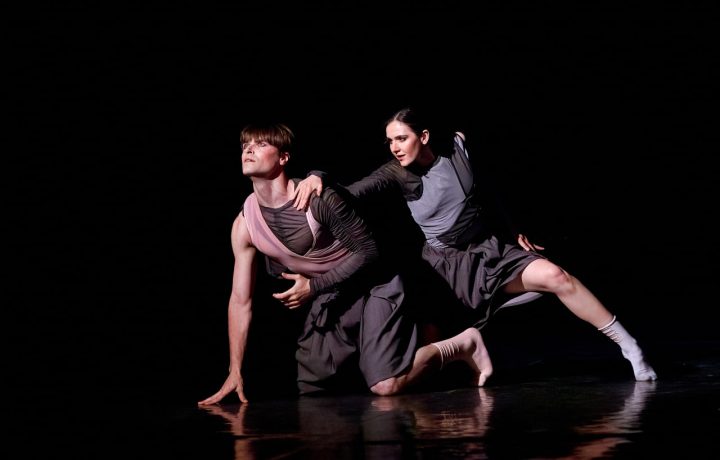
Radu Poklitaru enjoys worldwide recognition and a scattering of national “Kyiv Pectoral” awards. But it is not only about the regalia and the prizes — it is about the fact that the productions of his Kyiv Modern Ballet theatre are the most vivid of shows, with distinctive movement and dramaturgy that, in the brightness of their colours, recall Broadway musicals, and, in their scope and metaphysical filling, fantasy-genre blockbusters.
Poklitaru transforms classical ballet plots, building his own story. In his “Swan Lake”, for instance, dark sorcerers kill the white swans, take away their cygnet and try to raise it in their own way. And in “The Nutcracker”, where hordes of grey rats will lodge in your memory for a long time, the girl, the main heroine, freezes to death in the cold — the whole action, it turns out, was her dream. “That ending came about only after the third performance,” Poklitaru admits to Focus.
“The loss of acuteness of perception is one of the main losses in human life. We unlearn how to rejoice in simple things”
The fabula of his ballets is often built on the following formula: dark forces attack the world, a luminous hero arises in their path, he perishes and thereby saves the world. Poklitaru is not very fond of analysing his creations. He says that he works on intuition.
The choreographer gained wide popularity after taking part in several television seasons of the project “Everybody Dance!”, where he created dozens of dance numbers. In 2014 Poklitaru took part in staging the opening and closing ceremonies of the Olympic Games in Sochi.
Today his Kyiv Modern Ballet theatre is opening its season in compliance with quarantine measures. In an interview with Focus, Poklitaru reveals the secrets of his creative laboratory and some details of the new ballet “The Little Prince”, whose premiere is planned for October.
Tell us about the particularities of working on “The Little Prince”.
— “The Little Prince” translates into the language of choreography with difficulty. There are far too many words and aphorisms in it. It is not easy to find a choreographic interlinear.
For you? You find metaphysics in any plot.
— Yes (laughs), one could easily rework the abbreviation of my theatre, KMB, into “Kyiv Metaphysic Ballet”. But perhaps it is not about me, but about the art of dance, which is in principle inherently endowed with something metaphysical. After all, we tell such complicated stories as “Swan Lake”, “The Nutcracker”, “Viy”, using only movements, and they, frankly, are not meant to be performed “without words”. Perhaps in the transition from one genre to another, from one state into another, the very thing you call metaphysics occurs.
I mean that you raise any story to the level of myth, as in the fantasy genre. How does the sacrament of creation arise for you?
— It all and always begins with me sitting and inventing in solitude. This is the happiest time for me, because I am in no way connected with the human factor, unless one counts conversation with oneself as such. My starter kit: a computer, headphones, music. The initial efforts turn into a banal Word file called “Thoughts on the project”. Only my co-authors have access to this file: the set designers, the costume designers, the composer (if there is one) and the PR manager of our theatre, who tries to extract from this scarcely literary text certain phrases in order to use them later in the media.
Afterwards the file acquires a timing: at which second who enters and exits. Often I use a literary primary source — I rework it freely, because not everything can be translated into the language of ballet.
Mozart is the Little Prince’s kindred spirit
Judging by the unexpected numbers in the television programme “Everybody Dance!”, it seems that you can translate literally everything into the language of ballet.
— If we take “The Little Prince”, there are quite a few moments in it that are hard to retell in the language of ballet, or that it makes no sense to. For example, there is the story about a planet being discovered by a Turkish astronomer whose words were not taken seriously, because he was dressed in Turkish trousers and a fez. But when he changed into a tuxedo, everyone immediately accepted his report, because he was dressed like a European. This is not a very balletic story.
Why?
— Ballet is first and foremost an emotional thing; everything emotional is easily told. Yes, the rational can also be told in the language of ballet, but in that case a question always arises: what if one replaced it with an emotional rendering that would work far better?
I will tell you how I came to this project. I am not a very industrious person, but for my Kyiv Modern Ballet theatre I have to release, once a year, a large production and, preferably, also a small one. I must not stay silent for longer than a year — that is dangerous from the standpoint of the profession: one needs to be constantly in creative tone. In my creative reserves I have favourite things that I save for later. I remember how I came across the first works of little Mozart, who wrote his first symphony at the age of eight. When I listened to that music, I was delighted! And yet, by today’s standards, it was written by a boy in the second grade — he ought to be out kicking a football around!
His musician father drilled him from childhood.
— Yes, his father was harsh. But, one way or another, little Mozart’s music was astounding. And for a while that subject sat on my computer in a folder called “Ballet ‘Childhood’”. The idea was about how much we do not remember about childhood. I myself feel that I have lost a great deal — especially in the acuteness of perception. Chișinău, where I was born, is not far from Odesa. In Soviet times that distance was covered in three hours by train. My mother took me to the sea in Odesa every summer. I remember the excitement with which I awaited the encounter with the sea — with that enormous quantity of water stretching to the horizon. And there, on Prymorskyi Boulevard, where the bust of Pushkin stands, my mother and I would walk up to the parapet, and I would see the sea — that encounter took my breath away. An incredible event! But on one of my later visits, when I was already 19–20 years old, when I walked up to the parapet, nothing of the sort happened. The sea was just the sea. I am already a grown-up, so why should I get excited?
The loss of acuteness of perception is one of the main losses in human life. We unlearn how to rejoice in simple things. That is why I am trying to create a production about the childhood we long for and that can no longer be brought back.
In my creative work I am a prosaic person, and I always took with a smirk the story that the chemist Mendeleev saw his table in a dream. But the same thing happened to me. It was precisely in a dream that the idea came to me that the little boy Mozart, who wrote symphonies, is close in age to the Little Prince. Everything fell into place. Usually a dream is forgotten by morning, but I woke up with the understanding that it was a good idea: to unite Mozart and the Prince. And so the folder “Ballet ‘Childhood’” was renamed the folder “The Little Prince”.
In addition to Mozart’s music, there was added an utterly brilliant — from my point of view — performance of Ukrainian lullabies by Mariia Pylypchak. She is a collector, a populariser of folklore and an enthusiast of her craft, ardently devoted to ensuring that Ukraine’s song heritage is preserved and passed on to the next generations. We received her consent to use her voice in this ballet.
That is the musical part of the production, but what about the visual, choreographic side?
— Usually, when I work on a production, I try to go away somewhere, because it is difficult for me to create in familiar surroundings. I conceived “Swan Lake” in the Netherlands — in Scheveningen, a suburb of The Hague. “The Sleeping Beauty” — in Vorzel, a more budget-friendly option: although I have somewhere to live in Kyiv, I rented a hotel room there. And “The Little Prince” happened in one of my most beloved places, the Greek town of Loutraki — a resort located 80 km from Athens. I rented myself a place there with a little courtyard; it was November. But I am a “walrus” — a winter swimmer — so I bathe in any weather. I spent my time there sitting at a little table with my laptop in a small patio beneath half-rotten oranges that threatened to fall on my head at any moment. I sat and thought: how to translate this work by Antoine de Saint-Exupéry, filled with magical images and aphorisms, into the language of dance. Take, for example, that famous saying: “We are responsible for those we have tamed.” And yet I always place my hopes in His Majesty the Dance, which can speak of something not literally, but far more emotionally than words. I always hope for that miracle.
Are the two antagonists — the Serpent and the Little Prince — already there?
— The Serpent is already there, but I am still in doubt; perhaps something will have to be reworked. In my version he has begun to acquire biblical features, although I had not planned that, and it is not there in Saint-Exupéry. But for some reason he has gradually come to resemble a postmodern Old Testament Serpent.
And what about the Prince?
— The Little Prince has already been born — he now lives a life of his own. And he travels, as we recall, across six planets before reaching Earth. These are the planets of the King, the Accountant, the Drunkard, the Lamplighter, the Geographer and the Vain Man. I was not sure how to translate the Accountant into the language of dance. He is not balletic, because he is not emotional. But all the same, I created him.
What is he like?
— Come to the premiere and see for yourself (laughs).
It will be online only.
— Yes, that is a requirement of the Ukrainian Cultural Foundation. We won their grant for “The Little Prince” by a wide margin. They allocated 1.8 million hryvnias for the production. Plus repayable financial assistance of 0.6 million hryvnias from the Kyiv Department of Culture. The total budget is 2.4 million hryvnias. Amid the pandemic, the UCF does not finance projects that involve the presence of spectators in the auditorium. Online only.
Slavic efficiency
A couple of words about the Olympics in Sochi. Is it the most grandiose production, in terms of scale, that you have had the chance to create?
— Of course. 445 people were involved. It was an interesting experience — it was frightening to take it on. But I was persuaded that I could do it. In the end it turned out fairly easy. I was there with my assistants — Oleksandr Leshchenko and Andrii Musorin. Musorin has now taken charge of the ballet of the Lviv National Opera. The ceremony was divided into four parts, which were staged by four people. All my colleagues were Western. And, interestingly, we Slavs acted irrationally: we had no rigid planning and no strict administration. With them, everything was clearly assigned — who was responsible for what, for every second of rehearsal time. It all seems correct, but in the end, for the last 20 days or so before the ceremony, we did not know what to do with ourselves: everything of ours was ready, while those fellows were still catching up (laughs). One must admit that the Slavic approach turned out to be more effective. With my assistants I would simply discuss: “What are we rehearsing today — the ‘March’? Well, let’s do it.” The difficulty in Sochi turned out to be that it was winter and the stadium was unheated. Among the five hundred dancers, many caught cold. Someone was always being swapped out or absent — a heap of people sick with a fever. I saw the full cast only at the ceremony.
How did you manage such an enormous number of dancers?
— With the help of FM earphones: every performer had them in their ears — the right ear free for the music, and in the left an earpiece with my voice. I connected to different groups. At rehearsals I would check whether they could hear me or not. “Lads, now everyone sit down on three-four.” About five remained standing. Aha — the earpieces had been removed without permission — “Come over here onto the floorcloth, then!”
Contemporary ballet in Ukraine still remains a black sheep. Why?
— Yes, for 14 years now our theatre has been the locomotive in this regard. As a repertory theatre, we really are the only ones who do this on a permanent basis. But sometimes teams come together for a project. Denys Matvienko made the ballet “The Great Gatsby” to music by Kostiantyn Meladze. Kostiantyn Tomilchenko created interesting things at the VDNG: the shows “Munchausen” and “Guardians of Dreams” — a fusion of dance and circus with digital technologies. That, perhaps, is all.
What hinders the multiplication of this phenomenon?
— As of today, the Kyiv Modern Ballet theatre cannot even obtain national status because of the inertia of bureaucratic structures. But I am in a state of dialogue with the Minister of Culture, Oleksandr Tkachenko, and I hope the matter will get off the ground. As for young choreographers, quite a few of them have emerged from within the walls of our theatre. These are Oleksii Busko, Serhii Kon, Artem Shoshyn, Illia Miroshnichenko, Vladyslav Detiuchenko. I try to give them the chance to realise themselves, because it is hard to find another company like ours, where one can constantly try things out.
Who was a model for you, whom are you often compared with?
— In the years of my creative youth I was often compared with the Swedish choreographer Mats Ek. In different periods of my life I have had different idols. At first I was under the impression of the work of the Frenchman Maurice Béjart, then of Jiří Kylián, who is of Czech origin but worked in The Hague. It is impossible to imitate him, as with any genius, but one can admire. And among the Russian ones, I watch with great pleasure the productions of the St. Petersburg choreographer Boris Eifman. He, by the way, studied in Chișinău under my father. I am certainly not like him, because Eifman is a neoclassicist. But he is the first and only one to have staged the production “The Brothers Karamazov”. I, too, have an idea to stage one grandiose work, but it is still too early to speak of that.
Kostiantyn Rylev