A date with Chopin | Premiere of “Nine Dates” staged by Radu Poklitaru, KYIV MODERN-BALLET Theatre
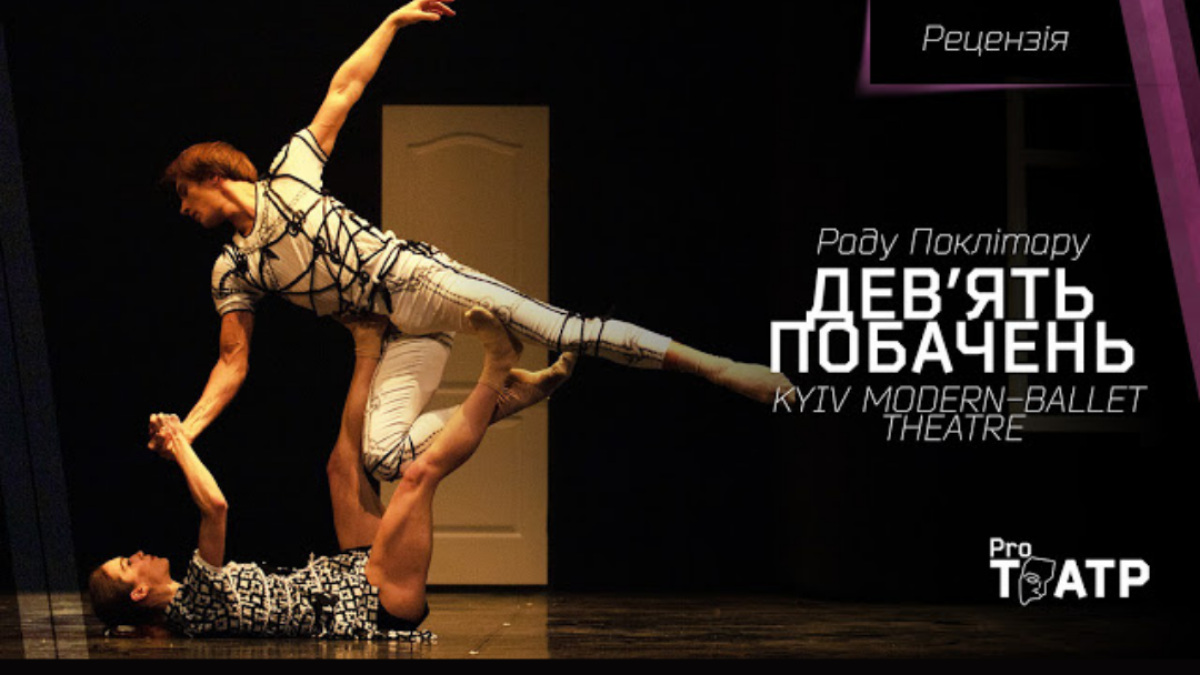
“Mysterious, diabolical, feminine, masculine, incomprehensible, understandable to all, the tragic Chopin” — although these words belong to Sviatoslav Richter, Radu Poklitaru inscribes such epithets into the lexical choreographic palette of his new production “Nine Dates” to music by Frédéric Chopin.
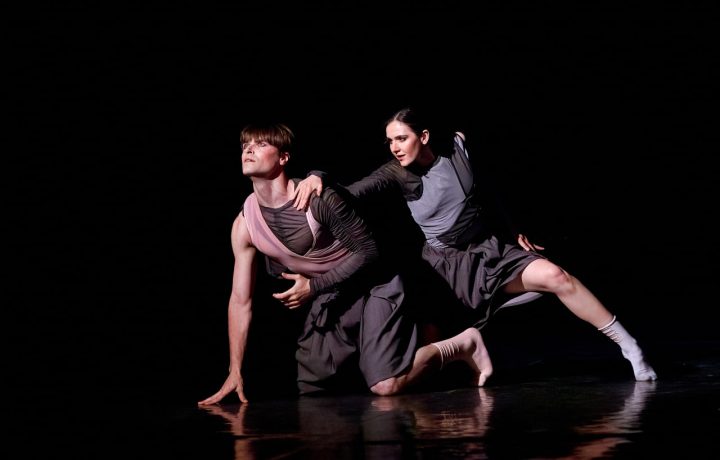
«The mysterious, diabolical, feminine, masculine, incomprehensible, comprehensible to all, tragic Chopin» – although these words belong to Sviatoslav Richter, Radu Poklitaru inscribes such epithets into the choreographic lexical palette of his new production «Nine Dates» set to the music of Frédéric Chopin. All the many hues of a romantic worldview, all that usually required monumental compositions for its embodiment, Chopin conveys through the piano alone, while the director-choreographer does so through a pair of two principal dancers of the KYIV MODERN-BALLET Theatre – Olena Saltykova and Artem Shoshyn.
Nine stories of encounters, like nine sketches in an artist’s notebook about how varied the birth of a feeling, or the search for it, can be. Love as a dramatic crossroads, as the breaking of shackles, as an ironic chance meeting, as a misunderstanding or the fire of passion. Radu Poklitaru subtly senses the harmony of the delicate lacework of Chopin’s music, and so he does not overload the choreographic études with a complex language of dance, but rather creates every condition for the actorly expression of the individualities of the lead performers. In particular, each appearance «at the door of one’s date» required from Artem Shoshyn a precise textural mood, and this set the tone for every subsequent «date», to which his partner Olena Saltykova aptly responded.
The mastery of a storyteller reveals itself when, amid subtle irony and a light manner of narration of these so-familiar stories, a profound philosophy of feeling takes root. The dancers display lofty artistry in the story about the love of a blind man, which, combined with Chopin’s «Preludes, Op. 28: No. 4 in E Minor», brings the choreographic idea to an aristocratic refinement. Quite aptly, like the legendary Al Pacino once did in the film «Scent of a Woman», Artem Shoshyn embodies in movement the psychophysics of his character, whose sightless perception is able to convey the feeling of love in its finest facets.
Speaking of the production «Nine Dates», one involuntarily recalls the choreographic miniature «Spring. Summer. Autumn. Winter» staged by Radu Poklitaru to the music of Pyotr Tchaikovsky and performed by this same pair. And although it was not a full performance but a small sketch, it contained within it the plot of a complete dramatic tale about the relationship between a man and a woman, from its very inception to deep old age; it could well have become a continuation of one of those 9 dates. Yet not every date guarantees a long shared journey through the seasons of life. Therefore each story in this case – is a completed thought, filled with varying degrees of drama – a vocabulary of the very first feelings.
And if we return to Sviatoslav Richter’s definition of Chopin’s music, then in the context of this production we have not yet mentioned such of its shades as «mysticism, diabolism», or rather, in this case, it would be better to say even infernality. Radu Poklitaru is not the kind of director who would confine himself to recounting familiar stories; he is, above all, the one whose theatre leaves behind a pause in which a polyphony of meanings resounds. Thus the principal solution of the performance, which also becomes its frame, is the image embodied by Anastasiia Dobrovolska. She is an old crone – a mute observer of every story. On her back is a great hump-burden, and she herself is dressed in rags that trail behind her like a train, just as a person is always trailed by their lived past (costumes by Anna Ipatieva). This image is filled with the artifacts of old age and timeless loneliness, sometimes even envy of youth, sorrow for a love that was and never came to be. This image becomes a field for diverse interpretations, which will undoubtedly be different for each viewer – perhaps she is Moira, who, drawing the knitting needles from her hair, weaves all those stories together; for some – she is the hunched experience of feelings lived through; and for others – a collective image of all those girls who searched and did not find, and who perhaps lived through nine wonderful moments in their lives, and all that now remains for them in old age – is only the memory of what was gained, felt, and lost.
At the end she will sit down at the very same table at which the young girl sat each time in anticipation of a date; her fingers will mark out the rhythm of a heartbeat, just as the slender little fingers of the girl marked out the rhythm at the beginning of the performance in anticipation of a new encounter. But now this rhythm is even and calm. And whether a heart clothed in the rags of the years is still able to beat out a quickened rhythm – let that remain unknown.
Review: Dasha KASHPERSKA