Radu Poklitaru: “Kyiv Modern Ballet is an absolute monopolist in contemporary choreography”
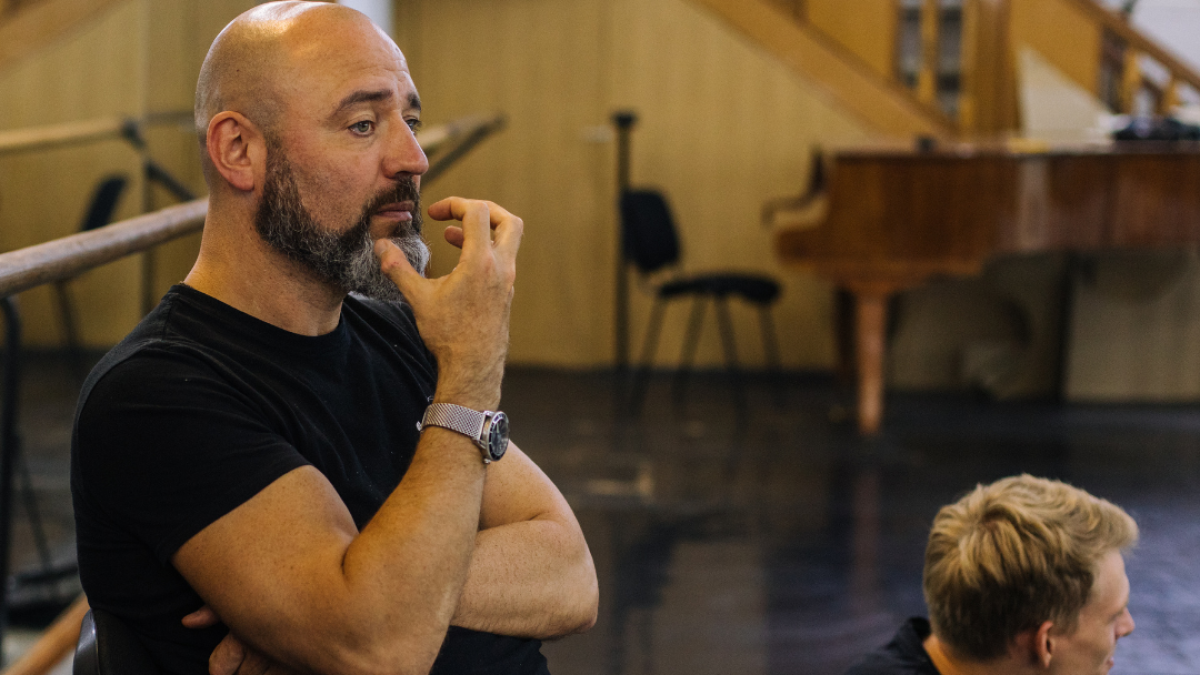
One of the most notable choreographers in Ukraine — Radu Poklitaru, who continues to charm and surprise with his productions.
The “Kyiv Modern Ballet” he created has entered its 15th season. And this is a reason to recall the past and share plans.
— Radu, let’s begin with the fact that Kyiv Modern Ballet has entered its 15th season. On its tenth anniversary you mentioned that, at that time, only one person from the original cast of “Carmen.TV” was still on stage. What is the company like today?
— Things have actually stayed that way. The person who was in the original cast of “Carmen.TV” back then is Dmytro Kondratiuk. He still works in the theatre today. So he is our most loyal, most experienced, wonderful artist. A great many young people have joined, and this season the company has grown a little. When it was founded, it numbered 16 artists, and now it numbers 22. I would like to have more artists in the company. Since ballet is, unfortunately, an injury-prone art, it is in any case always better to have a reserve, so that there are no urgent replacements.
— When and why does the desire to rework classical plots arise in you, beginning with “Carmen.TV”?
— I think my work can be divided into two parts: the first is the reinterpretation of classical plots, classical ballets, and the second is working from a literary source. It would be wrong to classify “Carmen.TV” as a classical ballet, because no classical version exists. The most famous one is the version performed in the 1970s by Maya Plisetskaya. However, that is relative classics after all, and it was fairly recent. In the theatre’s repertoire we have all three of Tchaikovsky’s ballets — “The Nutcracker”, “Swan Lake”, “The Sleeping Beauty” — and “Giselle” by the French composer Adolphe Adam. I think that is practically where all our reworkings of classical plots end.
— There is also “Viy”.
— “Viy” has nothing to do with classical ballet at all. But if we are talking about a literary source for a ballet, then in principle a ballet performance is not plotless. A performance created on a literary basis is simply a plot-driven ballet performance; it is not a reworking. I like dealing with literature, I am very particular when I choose a literary source. Since we have mentioned “Viy”, it has an ideal literary source, because it is extraordinarily emotional. And in it, phantasmagoria and the real world are intermingled. In other words, it is a wonderful literary source for a ballet.
— You are currently working on the ballet “The Little Prince”.
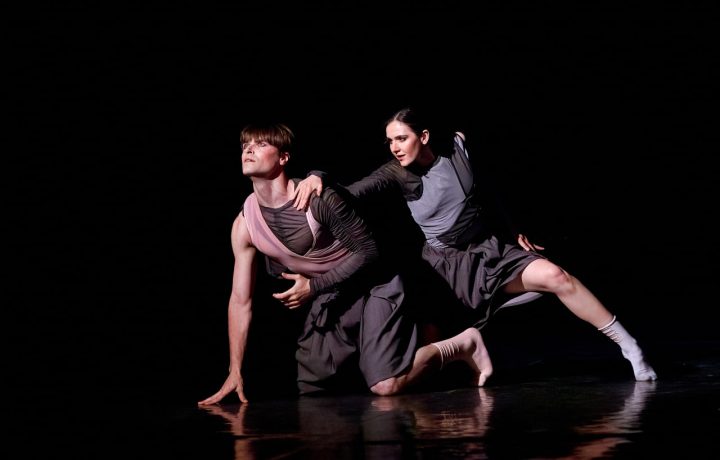
— In Saint-Exupéry’s work everything is not so clear-cut; the main storyline of “The Little Prince” is not so obvious, it is dotted. Here the words, the aphorisms, the metaphors embedded in the plot carry more weight... At the moment my task is, in particular, how to convey these metaphors, these wonderful philosophical thoughts, which the writer tries to put across to us in the most childlike language possible, in the language of contemporary choreography; how to find the choreographic equivalent of all this. “You become responsible, forever, for what you have tamed” — an absolutely staggering thought. Imagine how difficult it is to find a choreographic equivalent for that. This is what I am working on now. I love challenges in principle, and it was I myself who came up with the idea of doing “The Little Prince”, so it would be a sin to complain, since no one imposed it on me. I find it very interesting to solve this puzzle, to grapple with difficult tasks, to cope with them. You and I are talking during the period when I am working on staging the new ballet every evening.
— Ideas for new productions always come to you in unusual places. Where was Radu Poklitaru’s “The Little Prince” conceived?
— I cannot conceive of a new ballet while sitting in the office, that is true. Usually, in order to sit down and create some kind of director’s exposition, a written record of my vision of a performance, I have to go somewhere or at least change something, cut myself off from my usual existence. Earlier, in my youth, this was not the case; now I have become more particular, but this has been going on for several years now. For example, “Swan Lake” was conceived in Holland, at a resort near The Hague. If there is no opportunity to travel far, then “The Sleeping Beauty” I conceived in Vorzel, where I took a hotel room and left Kyiv. “The Little Prince” I conceived in the wonderful Greek town of Loutraki. It is a resort near Athens, on the shore of the Gulf of Corinth. One of my most beloved towns in the world, very small, provincial, cozy. I was sitting at the computer, it was very cold, it was the month of November, last year, and it was completely out of season, but I am a winter swimmer, and I bathe in the sea at any time. All the more so since it is the Mediterranean Sea. And so, during breaks in the birth of ideas for the new production, I would run off for a quick dip to freshen up. I sat in a little patio, with already almost half-rotten oranges hanging above me... And with the laptop on the table I created a new little file (each time it is a file called “Thoughts on the project”) — “The Little Prince”.
The 8-year-old Mozart is the Little Prince
— Why did your choice fall on this particular work?
— In my “stash” I always have some most beloved things from the realm of art that have struck me: music, a literary work — anything at all. They lie there, and for a long time I cannot touch them, because I do not know how. This time it was the very same story. Quite by chance I discovered for myself the music of a little eight-year-old boy named Wolfgang Amadeus Mozart. When I heard his first symphonies, I was simply astounded that he had begun writing music at the age of 8... By today’s standards that is the second grade of school, when in reality most children have nothing in their heads except games and socializing with their peers. Yet Mozart at that age was writing music of genius. In other words, it is absolutely obvious that he was a genius. This music conquered me, and for a long time I pondered what it could become; I even started making the traditional little file with “Thoughts on the project”, and the ballet was to be called “Childhood”. I wanted to resurrect everything that had been in my childhood, some memories, some nostalgic things, and then suddenly, one fine night... I had never had nocturnal epiphanies, this was the first time in my life: I suddenly realized that little Mozart, the little boy — this would be the Little Prince.
— You combined Mozart’s music with Ukrainian lullabies.
— To Mozart’s music I attached Ukrainian a cappella lullabies in the absolutely marvelous performance of Mariia Pylypchak. We have already become friends. Mariia attended our performances. A wonderful woman, a devotee of Ukrainian folklore, and she, of course, does a great deal to keep it from disappearing. It is extraordinarily sad when a culture disappears: of singing, of dance in particular. Mariia Pylypchak collects, spreads, and records all of this for future descendants. I knew none of this about her when I first heard her voice, which struck me to the depths of my soul. An incredible combination of Mozart’s music and Ukrainian lullabies — and the production’s musical score turned out to be absolutely brilliant.
— What was Radu Poklitaru’s childhood like? When did you begin to get acquainted with music seriously?
— At four and a half years old my mother sent me to study ballet. Music came into my life later. We had a record player at home and we had vinyl records. And somehow I, on my own, as a child, got hooked on classical music. Then a momentous encounter occurred in my life: when I was studying at the Perm Ballet School, my mentor was Yuri Mikhailovich Sidorov. A man who is one of the greatest record collectors in Perm. A cupboard in each of the four rooms of his apartment was filled with them. Now he buys compact discs; back then you could still find them. For example, Caruso records from the end of the 19th century, those thick vinyl records. On one side there was a single aria performed by Caruso, and on the other — an engraving in the form of little angels. For about half a year I lived at the home of Yuri Mikhailovich and his wife as an adopted son, you might say. And during that time I became imbued with classical music. Those were my first “universities”, so to speak. And when I came to Minsk and entered the conservatory at the department of choreography, I was simply already deepening my knowledge in this field. And so, of course, in my performances I use classical music, as well as modern music, or going all the way back to the Baroque era, or even earlier. I also love folklore. And in the production “The Little Prince” everything I love came together: folklore and classical music.
— What from your own childhood did you want to carry over into the ballet?
— My childhood was divided into two parts. Until the age of 10 I lived in the family the life of an ordinary child, I went to school. I remember very little from that period. I do not remember a single name of my classmates (I have a bad memory for people in general). At the age of 10 comes the age of the future ballet artist, when it is necessary to receive a professional education. Given that my parents graduated from the foremost ballet schools of the Soviet Union (my father — Leningrad, and my mother — Perm), they decided that I, too, should study not in Chisinau, where there was little chance of receiving a proper ballet education, either then or now. And so they began placing me in various ballet schools. I was tossed all over the Soviet Union in the first three years. I studied at the Moscow Ballet School, I studied at the Odesa Ballet School, and I had to scrape by for half a year in Chisinau. In the end, after failing to get into Leningrad and Kyiv, I ultimately enrolled in the Perm school, which I went on to graduate from.
From the age of 10 my childhood, in the usual sense, ended. The childhood of a ballet child began. It is a boarding school, it is far from home, it is a classical dance lesson already at 8:15, and the last rehearsal ended no earlier than nine in the evening. Despite such a demanding schedule, I recall that absolutely wonderful period with nostalgia. That was when my formation as a personality, as a professional, took place.
— Which of the characters will audiences see in the ballet production “The Little Prince”?
— Of the characters that we have kept from the book, there are the Little Prince, the Pilot, the Rose, the Snake, the Fox; there will be the inhabitants of the planets, there will be a train, there will be an airplane — these are all separate characters.
— Your productions always have interesting costumes. Who created them this time?
— This time the costumes are the responsibility of someone who is by no means a newcomer to our theatre — my wonderful friend Dmytro Kuriata, formerly head of the style department at the STB television channel and the costume designer for the series “Kríposna” (“The Serf Girl”).
— Your creative life has not intersected with television lately.
— Television does not intersect with me in any way. “So You Think You Can Dance” has closed. I am not very fond of taking part in shows that are not my format, for example a show like “MasterChef”. Anything connected with art, with dance — by all means, but no such offers have come in. There is still the show “Dancing with the Stars” left, but they do not invite me there.
— The production “The Little Prince” became one of the winners of the grant competition of the Ukrainian Cultural Foundation. Why did you decide to apply?
— Everyone knows about the Ukrainian Cultural Foundation. It is practically the only way to obtain real money to bring a project to life. Thank God this organization was created. We could not apply last year for “Viy”, because, under the UCF’s terms, the applicant legal entity must have existed for at least two years. If we speak of the theatre, then this year we turn fifteen years old, but de jure at that time, according to the documents, we — as a separate, independent theatre — had existed for only a year and a half. In general, we now begin counting our history from 2005. That was when we had the pilot project Le forze del destino (“The Forces of Destiny”), created on commission from Volodymyr Filippov’s arts foundation. We decided to add it to our chronology. Without it, we would in effect be crossing out a year of a wonderful page of our history. As for “The Little Prince”: we won the grant, and I was very pleased that, by the number of points awarded by the experts, we were far ahead of all the other projects that took part with us in the same category. And, of course, I am already thinking now about ideas for a new project for next year, in order to continue our cooperation with the UCF.
— How easy is it to deal with the bureaucratic intricacies of submitting a grant application?
— Thank God I am not alone on the barricades now. You and I are talking right now at a café in the street, because there are 5 people working in the office. Including on “The Little Prince”, on the tender documentation, on the ballet’s grind. I am the principal ballet master of the Kyiv Modern Ballet theatre, and the director and artistic director is Volodymyr Melenchukov. And all the documentation work for cooperation with the UCF is carried out under his charge. From me, all that was needed for those documents was a creative synopsis, a small literary part. And the rest is the work of our office, of our team.
— The quarantine cancelled many performances of Kyiv Modern Ballet. Where in the world did you not get to go?
— A great many touring trips were cancelled. In particular, to such wonderful countries that I do not know whether we will be able to visit after all the quarantine restrictions are over. We had planned tours to Peru, Mongolia, Kazakhstan, Holland, the Czech Republic, Estonia, Belgium, and Latvia. The Baltic countries have theoretically rescheduled our visit for the spring; we hope to preserve those tours, in particular the invitation to the Latvian Opera Theatre.
— What income did the artists of the Kyiv Municipal Academic Theatre have over nearly half a year of COVID?
— A very difficult period. And even in the pre-quarantine situation municipal artists could not boast of their salaries. In general, a ballet artist is a highly convertible commodity, popular anywhere. It could be show business, it could be some Western ballet companies, and most often it is a cruise ship, a show program. It is hard to retain young artists. Staff turnover in the theatre is high. Fortunately, Ukraine is a country of talented people, and the people who come to take the place of those who have left are good artists. At a casting I never let my guard down and I try to choose the best. Right now the state of the company is very good. I have been working on this for many years.
— It is known that “national” status improves a theatre’s financial situation as well as that of its artists. You initiated the desire for such a change even earlier. What is the situation at this stage?
— With the new Minister of Culture Oleksandr Tkachenko we have once again returned to the topic of our theatre’s status. I am convinced that Kyiv Modern Ballet is worthy of the title of national theatre — like no other among those theatres that have not yet received this status. The main thing is that one must understand what the point of national status is. In a single field of art only one theatre should hold national status — that is its primary meaning. Kyiv Modern Ballet is an absolute monopolist in the area of contemporary choreography. Such an enormous ship, which has been sailing the Ukrainian cultural field for fifteen years now and most certainly has the right to this status.
— The question of its own premises remains just as relevant for the theatre.
— I am, of course, a realist, and I understand that no one will build us a new stage in this country. In all the time of independence only one theatre was built — the Theatre on Podil — and even that was an annex. Unfortunately, Ukraine is not a cultural Mecca. I say this not about the people who work in culture, but about those in power, on whom so much depends. An enormous amount of attention is devoted to business, to infrastructure. But culture always remains in the back yard, beyond even the peripheral vision of top officials. That is very sad.
— By the way, you had a production set to the music of Myroslav Skoryk. Are you not planning to revive it?
— The ballet “Crossroads” set to the music of Myroslav Skoryk was the initiative of the then Minister of Culture Mykhailo Kulyniak and of the Ministry of Foreign Affairs. The project is a co-production of Kyiv Modern Ballet and the National Opera of Ukraine. Unfortunately, a co-production is always a very difficult mode of existence for a performance. I have had several such experiences in my life, and each time it had no long-term prospects. For various reasons this performance, which was a success with the public and which, in my view, represented Ukrainian culture quite worthily, cannot be revived on the academic stage. The performance’s material assets belong to the National Opera; from my side there were only the artists. The costumes, the sets, the orchestra, the stage, the lighting — all of it the National Opera’s. From Kyiv Modern Ballet — the choreography and the artists who performed that choreography.
“Nine Dates” with Chopin
— You hold many of the highest titles, in particular Honored Artist of Ukraine and laureate of the Taras Shevchenko National Prize of Ukraine. Does this gratify you?
— I would be more pleased if the work of the theatre were being recognized. I am not a title hunter. There is a good joke: “And he slept very badly, having read too much of his own business card” — that is definitely not about me. Returning to national status — it is more important that the theatre’s artists receive titles. Thank God, the ice has broken, and this year in March the first artist in the theatre’s entire history was awarded the first title of Honored Artist of Ukraine — Artem Shoshyn. For long years we submitted our artists for titles, and each time the documents would vanish and everything “sank into oblivion”.
— During the quarantine you prepared one more performance — “Nine Dates”.
— The very idea behind this performance has a long-standing origin. About ten years ago I was staging a performance for the pair Ivan Vasiliev and Natalia Osipova on commission from the producer Sergei Danilian (one of the foremost ballet producers in the world), but at the time that idea did not find its embodiment. It consisted of creating a ballet to the music of Chopin: a cycle of dates, where each time it is the same day, the same date, but each time the story develops differently, with a different ending. It is a chamber performance: a pair of artists and one more character. Taking advantage of the quarantine, we finished this performance, made it turnkey. Now we are in fact waiting for a date to appear so that we can open ticket sales. We hope that it will be somewhere closer to the end of November, or perhaps the beginning of December. Definitely after “The Little Prince”, which will premiere on October 21.
— Does the online format satisfy you? Will it be a multi-camera shoot?
— I find it more interesting to work when there are spectators in the hall. But the global trend on the whole is online showings. I have many friends in various theatres around the world who tell me that they too are working online. The Nederlands Dans Theater, for instance — one of the best contemporary choreography theatres in the world — is not admitting a single spectator into the hall until the New Year; they show everything online. One has to understand that this is a forced measure. In the terms of the Ukrainian Cultural Foundation, taking the pandemic into account, it was stipulated that funding goes only to those projects that do not involve the presence of spectators in the hall. That is why we decided to change the form of showing “The Little Prince” to a live broadcast. The online broadcast of our ballet will be carried out by the wonderful portal OpenTheatre, which has already established itself as a leader in the retransmission of theatrical product. The risks are minimal; we know that these are professionals. At present there is no one in Ukraine who can do this better, and the result should be wonderful. Access to the premiere of “The Little Prince” is entirely free; registration is already under way. The online audience is far larger than the audience that goes to the theatre. We hope that more spectators will watch our ballet online than the auditorium holds, even if it holds nearly 2 thousand spectators.
Valentyna Samchenko