“The existence of Kyiv Modern Ballet is a gift for Ukraine”: Radu Poklitaru on the new season and the premiere of “The Queen of Spades”
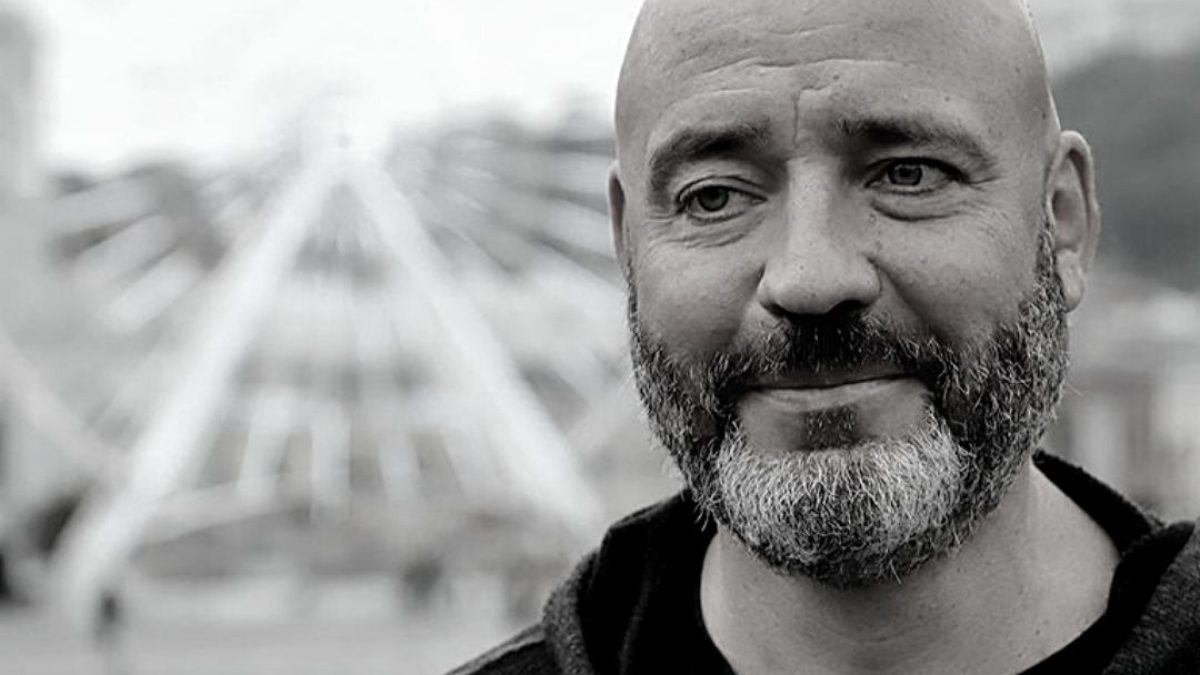
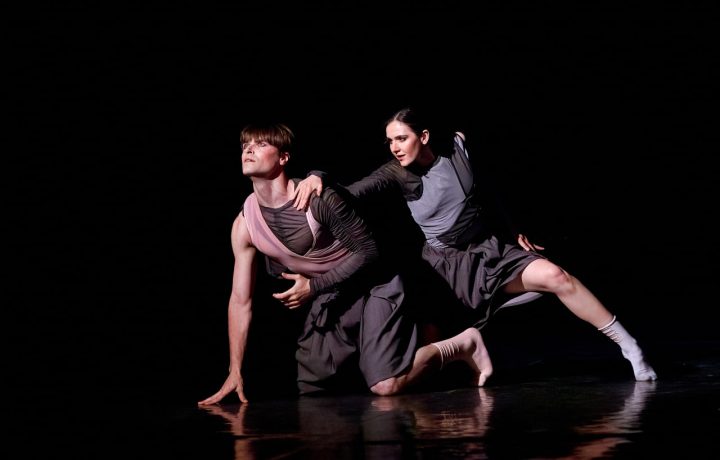
On September 24 the “Kyiv Modern Ballet” theatre opens its 16th season in the capital with the ballet “The Little Prince”. And already on October 13 audiences will be presented with a new choreographic production of “The Queen of Spades” to music by Pyotr Tchaikovsky. Founder and choreographer Radu Poklitaru told “Vechirniy Kyiv” about the theatre’s life and preparations for the premiere.
Kyiv Modern Ballet is already 16 years old. What do you consider your greatest achievement and your greatest failure over this time?
The greatest achievement of my life is the theatre itself — the fact that it is working. When it first appeared, few people believed it would be a viable theatrical organism. Back then we did not make plans far ahead. Even Hollywood producers cannot predict whether a film will succeed. I simply knew that such a theatre was needed. And now I am certain that the existence of Kyiv Modern Ballet is a great gift for Ukraine. Not every country in Eastern Europe or the post-Soviet space can boast a theatre of contemporary choreography with such a rich repertoire and such a high quality of performances. The state is fortunate that the theatre was created and managed to survive through all these years.
My greatest failure is that throughout all this time I have been unable to secure the authorities’ attention for the theatre. Kyiv Modern Ballet has still not been granted National status. This is a major problem for a dance theatre, because in the long run this status provides relatively decent salaries for the artists. The pain of our theatre is staff turnover. Young ballet artists are in demand; they can go anywhere, move to any theatre that pays them more. Most of the artists choose creativity and the stormy ovations after our performances. But some leave, and the company changes. This process does not help the stability of the theatre’s work or my confidence that I am doing everything right as the company’s artistic director. When I show foreign colleagues video recordings of our performances and then tell them the artists’ salaries, they say: this is impossible, why do they work at all? It is difficult to explain this to Europeans.
Our theatre is the only theatre of contemporary choreography in the country, and it clearly meets the criteria for national theatres. The regulations state that one theatre in its category may be granted National status. At the same time, we have many national theatres of drama, opera and ballet. But of contemporary choreography there is only one. I see an unwillingness to support culture in principle. We are reproached for not having our own building. Yet there are national companies, such as the Dudaryk choir or the Virsky ensemble, which also do not have one. Unfortunately, I do not know how to make the rounds of government offices and lobby for things. But I am not giving up.
THE THEATRE’S LIFE TODAY
By the way, the theatre still does not even have its own rehearsal base. You work in the premises of the Kyiv Opera in Podil. Have any options appeared?
For a choreographic theatre it is very important to have a large ballet hall, and preferably two. It must be a space with high ceilings, no columns, at least 15 by 15 metres in size. There is a huge shortage of such premises in the city. No one is planning to build new ones. In 30 years of independence, only the theatre in Podil has been built in Kyiv. And how many scandals are connected with it.
What does the company look like today? Who is left from the original lineup?
The creative company consists of 23 artists. From the original lineup only Dmytro Kondratiuk remains, and Serhii Kon has moved into a coach-répétiteur role. By the way, we submitted Dmytro Oleksandrovych for the title of Honoured Artist. I do not know how to convince those in power that an artist who has worked in the theatre for 16 years, danced all the leading roles and carried the repertoire, who is my right hand, is entitled to this title. With us, Honoured Artist titles go mainly to ballet artists of the national operas.
What remains behind the theatre’s scenes?
Daily classical training. The artists work with coach-répétiteurs — Anatolii Kozlov and Oksana Khamrovska. When young artists join us, I watch them with mild anxiety. But potentially talented artists, even ones with no background in classical dance, progress quickly and make great strides through training.
On 24 September you open the season at the capital’s ICAC “Zhovtnevyi” with the ballet “The Little Prince”. Tell us about it, and what else will audiences be able to see in the near future?
“The Little Prince” is the most recent of the full-length ballets in our repertoire. It was created thanks to a grant from the Ukrainian Cultural Foundation. The performance uses many video projections, with the artists interacting with them. Also in September we will show “Swan Lake” on the main stage of ICAC “Zhovtnevyi”, an evening of ballets featuring “In pivo veritas” and our latest premiere “Nine Dates” at the Kyiv Opera in Podil. In October we plan to present “The Sleeping Beauty”.
Which performance would you recommend starting your acquaintance with the theatre?
With “The Little Prince” — it turned out very lovely and clear for audiences of any age. I always love my latest works. The youngest ones are my favourites.
On 13 October Kyiv audiences await the premiere of your new ballet “The Queen of Spades”. There is a well-known classical version of the ballet by the French choreographer Roland Petit. Why did you decide to turn to this material?
I have staged three of Tchaikovsky’s ballets — “Swan Lake”, “The Nutcracker” and “The Sleeping Beauty”. This is the great triad of classical ballet, for which we created our own versions in the language of neoclassicism and contemporary dance. I was not ready to part with Pyotr Ilyich; I love him too much. The idea arose to make “The Queen of Spades”. Remembering the success of the ballet “Carmen-TV” (a production set to music from Georges Bizet’s opera “Carmen”, which won the “Kyiv Pectoral” award in the categories “Best Performance of the Year” and “Best Choreographer’s Work” — Ed.), I at first wanted to stage “The Queen of Spades” to Tchaikovsky’s music, using the opera score. After all, it is one of his most famous and popular operas. But what did not get in my way in “Carmen-TV”, perhaps thanks to the French language, got very much in the way in “The Queen of Spades” with the text by Modest Tchaikovsky, the composer’s brother. It turned out that the images in my head were becoming a choreographic interlinear translation, a sign-language rendering in the language of dance. I had to abandon this idea.
In my creative reserve I always keep the most beloved, cherished musical works that have made a great impression on me. I spend them reluctantly and with apprehension. Tchaikovsky’s Sixth Symphony, the pinnacle of his symphonic music, also ended up on this list. In 2005 I heard a 1947 recording of the symphony performed by the orchestra under the baton of Nikolai Golovanov. In its emotional power and sincerity the music made a tremendous impression, as if I had been run over by a train. So stunning and grandiose that I was afraid to take it on. Sixteen years passed. I am already 49; it is unknown how many more ballets I will stage — and it is time to turn to my favourite works so that they may sound. Of course, this is a great responsibility. Tchaikovsky’s Sixth, the “Pathétique” Symphony, is like Mozart’s “Requiem”. It is difficult to create a choreographic reading that does not look humiliatingly small before the greatness of the music.
What sets your ballet apart?
I wanted to tell a story that usually remains outside the frame of a balletic reading. For Roland Petit’s ballet the audience had to come into the hall already knowing the story of the countess who gambled away a fortune at the Palace of Versailles in Paris and, in return for certain favours, received the secret of the three cards from Count Saint-Germain. “The three, the seven, the ace” — the ballet did not explain why exactly she possessed this secret. I believe the audience should not have to be prepared in advance. We offer a complete product, so that people do not leave with a feeling of “I didn’t get it”. That is why the first act of our performance is Versailles, and the second is Saint Petersburg.
Besides Tchaikovsky’s Sixth Symphony, you also use his Second in the ballet. Why did you choose this music?
It suited the first act. As it turned out, it was written in Ukraine, at the Davydov estate in the village of Kamianka in the Cherkasy region. We went there and spent a whole day. It was in that very house that Alexander Sergeyevich Pushkin, the author of the novella “The Queen of Spades”, lived in 1821, and forty years later — Pyotr Ilyich Tchaikovsky. Pushkin was friends with the Davydov family, who supported the Decembrist movement, and Tchaikovsky’s sister Alexandra married Lev Davydov, the son of the Decembrist Vasily Davydov. The composer used to rest there. Pyotr Ilyich did not own a house; he stayed in hotels or rented apartments. When he said “I’m going home”, he meant Kamianka. The music of his Second Symphony suited the ballet perfectly in its structure, melody and character. And only afterwards did I learn this whole story.
How much will the characters of “The Queen of Spades” change?
For the most part all the main characters carried over from Pushkin’s novella and Tchaikovsky’s opera. But there will be new characters as well. Without giving away the intrigue, I will only say that some characters have become more prominent compared with the original source. And some have retained their importance, but rivals have appeared for them.
Who is working on the production’s design?
This is already the fifth time we have collaborated with costume designer Dmytro Kuriata. For the ballet he created two separate worlds — Versailles and Saint Petersburg, reimagining the historical costumes of the Rococo and Empire eras. The difficulty of working with a dance theatre is that, besides stylising the era, the artists have to be comfortable. Especially in contemporary dance. Dmytro jokes that the artists will end up upside down anyway, so it has to be done beautifully and aesthetically. Olha Nikitina is responsible for the stage design and video content; this is already our third project together. Each time we hope to find something interesting and new. In Ukrainian dance theatre we will definitely be the first to use such “augmented reality” objects. We even hold separate technical rehearsals, because there are complex interactions between the artists and the projections.
The realisation of the project became possible thanks to the financial support of the Ukrainian Cultural Foundation and the Culture Department of the Kyiv City State Administration. The premiere of the performance will take place online and offline, on the stage of ICAC “Zhovtnevyi Palace”.
What is this performance about for you?
Our life consists of constant choices. As soon as we reach a conscious age, various options arise before us. In the performance we speak about the global choice that the protagonist has to make — between the ideals of love, sincere feeling, and an irresistible thirst for gain. It is about overcoming, temptation, and the strength and weakness of the will.
THE THEATRE AND QUARANTINE
Returning to our realities, quarantine restrictions are once again being introduced in Ukraine, and the possibility of a lockdown is not ruled out. Is the existence of a theatre during quarantine even possible at all?
All the moves online come from having no other choice. During quarantine, IT people who can work remotely, the online-sales sector and pharmaceutical companies feel just fine. As for culture — it is an attempt to stay afloat. When you try to convey living emotions through a computer screen, the result is a distorted form of art. We showed “The Little Prince” online, we have that experience, we know how to do it. And more viewers watched it than we could have gathered in the largest hall in Ukraine. But it will never compare with live theatre and interaction with the audience. I believe everyone needs to get vaccinated and close this topic.
And what about foreign tours?
All the tours were postponed for a long time and were eventually cancelled. Before the quarantine we had a tight and interesting schedule; we were planning to go to Latvia, Estonia, the Netherlands, even to a festival in Mongolia. Because of the quarantine restrictions the organisers took a pause. Until it ends and it becomes clear what comes next.
CHOREOGRAPHY AND THE STAGING PROCESS
Have you thought about founding your own studio to pass on your experience to the younger generation?
I teach at the Kyiv National University of Culture and Arts. I try to be as useful as possible to the students. I have been offered many times to set up a school bearing my name, but in that case I would have to do everything myself and at a high level. I admire colleagues who have the energy and managerial drive to realise various opportunities and projects at the same time. I am first and foremost engaged in ballet, and taking on something else could be to the detriment of my main work.
How do you rate the choreographic level of the young artists’ training?
I am not thrilled with the latest castings. We have high standards: an artist must master the basics of contemporary dance, be well-coordinated and have a good knowledge of classical dance, because classical technique is the foundation of my choreography. There are few such universal soldiers. On the whole the quality is rising. This applies not only to our theatre, but to any performing art. It is clearly noticeable from a distance, in the long-term perspective. When you watch film recordings of world ballet stars from the 1940s and 1950s, they bring an indulgent smile. The aesthetics of dance evolve very strongly over time.
What is more important to you — determination or choreographic training?
A person who has achieved success in dance is unquestionably determined. It is hard daily work. You have to know how to invest your energy. But in life everything is determined by talent.
What are your favourite places in Kyiv? Where do you like to spend your time?
My favourite district is Podil. I have finally finished building my own house outside the city. And today this home, made with love, is my place of power. There is a forest all around. Every morning I go for a walk with my dog Rusty. I took Rusty from a shelter; he is about two years old. He had spent a year in a kennel. But now he has a new life — this summer he went with us on holiday to Greece.
What has made you happy lately?
When I am in the process of staging, I try not to get distracted. I switch on energy-saving mode. I even try to sleep more. I might take an hour’s nap before an evening rehearsal in order to accumulate as much energy as possible and be as creative as I can in the hall. No matter how many performances I have staged, there are no templates or rules. The first rehearsal of a new ballet is always very frightening. You are afraid of repeating yourself, of failing. But the process begins, and you stop being afraid. Unlike composers or artists, who go through their creative torments alone, the choreographer goes through them in front of the artists.
Maria KATAIEVA, “Vechirniy Kyiv”