The Prince-Mozart phenomenon | Premiere of the ballet “The Little Prince” by Radu Poklitaru
There is a certain philosophical belief that a person is born a genius and could remain so, were it not for random acquaintances, terabytes of media information, the social purgatory of prejudices, stereotypes and all sorts of conventions…
There is a certain philosophical belief that a person is born a genius and could remain one, were it not for chance acquaintances, terabytes of media information, the social purgatory of prejudices, stereotypes and all sorts of conventions. If only we knew how to cleanse ourselves and the little world of our planet of pests, the way the Little Prince clears his planet of baobabs… For his new ballet «The Little Prince», which premiered online for the first time in the history of Kyiv Modern-Ballet, Radu Poklitaru drew on the timeless grown-up fairy tale by Antoine de Saint-Exupéry about a pure, forgotten childhood.
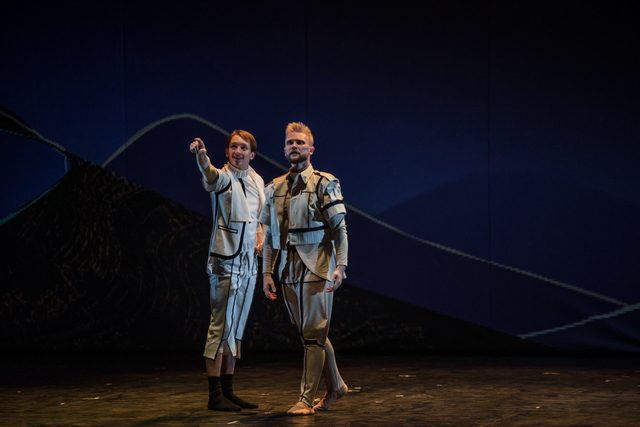
In the «Book of Books» it is said: «In the beginning was the Word». Radu Poklitaru, however, proclaims: «In the beginning was the music». It was precisely the phenomenon of the music of the child Mozart that became the root cause of this new reading of «The Little Prince», whose hero is that very genius who senses both love and the doom of death with extraordinary subtlety. Poklitaru deverbalizes the philosophy of Exupéry’s work to the level of a symbolic, figurative vocabulary of the body. Into an hour of action he places above all the emotional side of the story — about the Little Prince who is in fact a grown-up, one who has not lost his childhood. If you look closely, behind his naivety and even his mistakes lies considerable wisdom, for he does not allow himself to succumb to any alien influence of the masters of the 6 asteroids, who embody human vices and shortcomings: arrogance, conceit, drunkenness and so on.
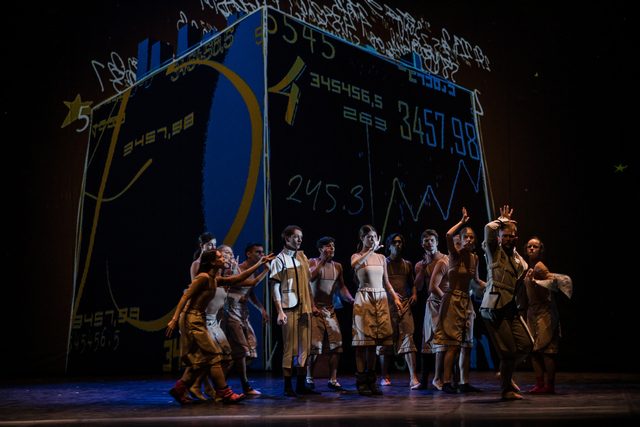
The choreographer-director synthesizes within the ballet’s musical score the flawless harmonies of Wolfgang Amadeus Mozart (from various creative periods) and Ukrainian lullabies performed a cappella by Mariya Pylypchak. One might wonder: where could such a musical pairing come from? In truth, the answer is concealed within Exupéry’s very philosophy. The music of Amadeus Mozart is the embodiment of wise purity and the cosmic harmony of love, the quintessence of which is the Prince himself. Lullabies are the ethnic-musical umbilical cord that connects a person to childhood. Music is a category of the emotional unconscious, and it alone is able to tie our memory not only to people and places, but also to long-forgotten sensations — which is what childhood is.
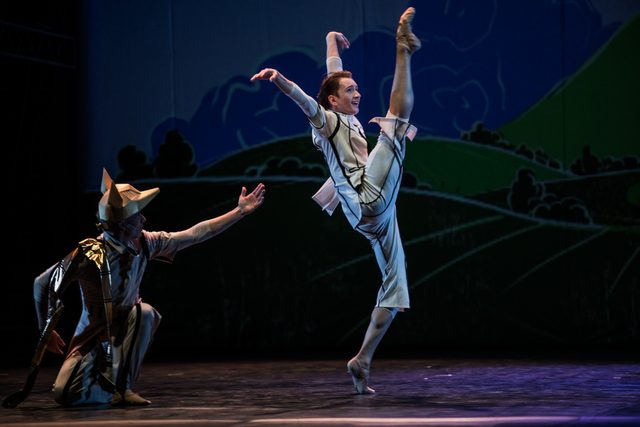
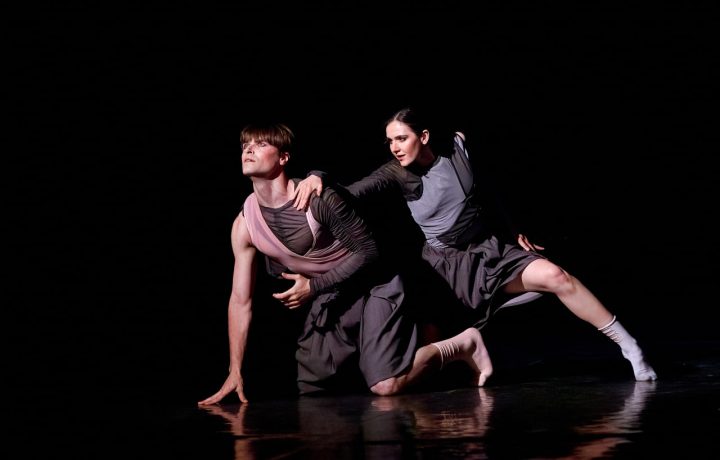
The little genius as performed by the theatre’s principal dancer Artem Shoshyn in Poklitaru’s ballet is a projection both onto Exupéry-the-child and onto the choreographer’s own «Self-as-a-child» and, of course, onto every spectator. On stage the ballet breathes with a rich choreographic language that reveals in detail every duet of the production: Prince – Pilot, Prince – Rose, Prince – Fox, Prince – Snake. Adding dimension to it is the extraordinarily aesthetic work of the production’s video-content author Olha Nikitina. The spectator literally finds themselves in outer space, surrounded by stars and planets as they travel together with the Little Prince through boundless expanse. This is that wonderful example of using modern technology in the theatre, where the video content in no way usurps the primacy of the artists. It does not become the dominant protagonist; instead it turns into a bridge between the spectator and the performers, creating for them a shared fairy-tale world.
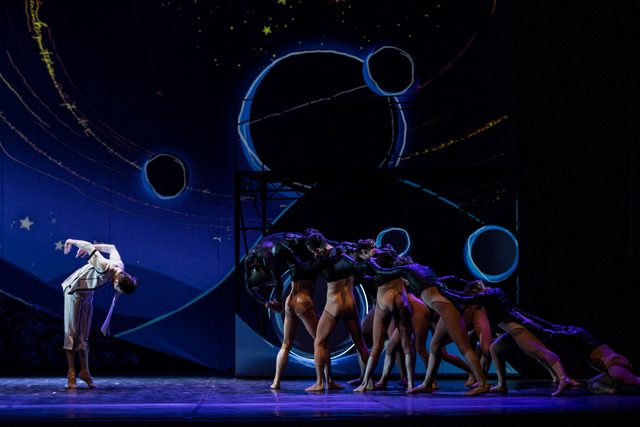
Radu Poklitaru treats the text of the work rather cautiously, at times even excessively so, as though trying not to overload the action with additional meanings of his own directorial authorship. Even so, to the accompaniment of Mozart’s Adagio from the Piano Concerto No. 23, he resolves the ending in a biblical manner — giving the Snake an apple, as an instrument of temptation, rather than a bite, as the instrument of killing in the original source. The Little Prince’s only temptation became the desire to return to his Rose, and his longing for her, which was already growing into a fear of never seeing her again — never again seeing the chief beautiful thing he had so carelessly let go. It is precisely this that makes him agree to the final journey across the sky. And it is not in vain that in the closing scene a lullaby symbolically rings out with the words «Sleep, Jesus, sleep…». What mood, then, is the ballet ultimately endowed with? The mood of childhood, that period of life when every childlike emotion (whether tears or laughter) is a cathartic experience. Yet Radu Poklitaru would not be himself if this reading lacked a sense of inevitability and a certain mystery — say, the «Mozart phenomenon». Once, in a letter to his father, Amadeus Mozart wrote: «Father, you cannot imagine what it means — to go to bed each evening not knowing whether I will wake up in the morning». Here is that mystery — each time is the last, each day is the day of the last music, and therefore everything that is to happen for the last time must be perfect and harmonious, and filled with the energy of pure love. With that love with which the Little Prince perceives this world lies that re-creation of universal harmony within a single person who carries this phenomenon within himself — the «Prince-Mozart phenomenon».
Review: Dasha Kashperska