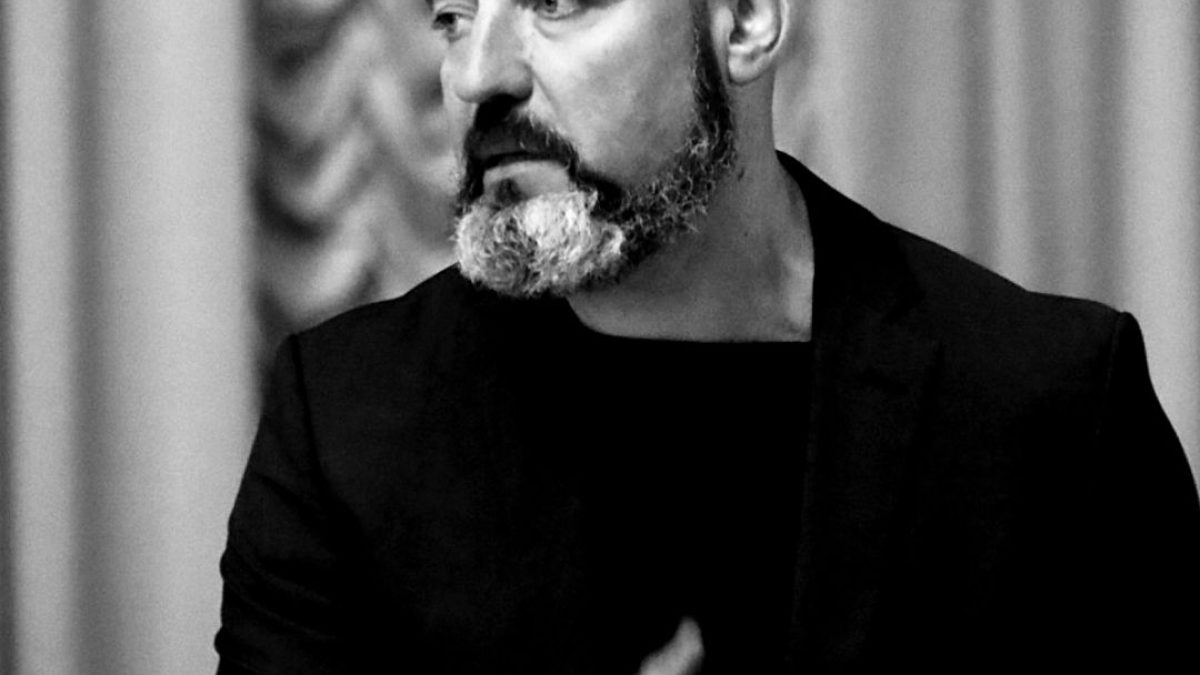
Radu Poklitaru, chief choreographer of the Kyiv Modern Ballet theatre
In our ballet you will see what came before the events described in the original novella “The Queen of Spades”.
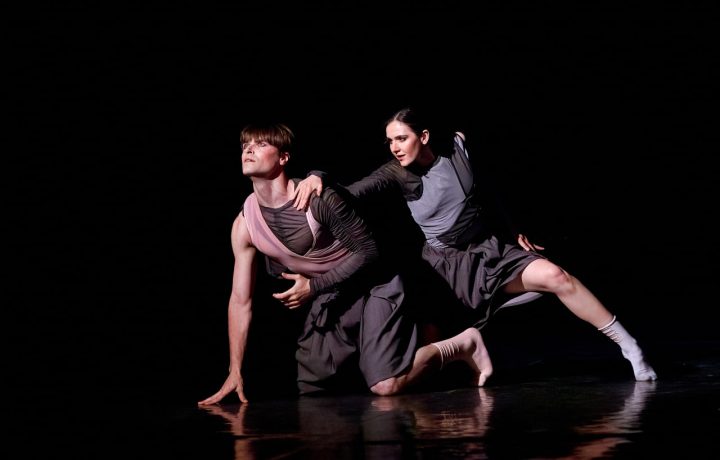
On 13 October, the premiere of the ballet «The Queen of Spades», performed by the Academic Theatre «Kyiv Modern Ballet», will take place on the stage of the Zhovtnevy Palace in Kyiv.
A world-renowned masterpiece of literary and musical art will be boldly reimagined through the lens of contemporary dance theatre and an innovative approach to direction.
We spoke about the ballet’s backstage with the director of «The Queen of Spades», the celebrated choreographer Radu Poklitaru.
Radu, «The Queen of Spades» is a fascinating and mystical novella by Pushkin, which has been translated into many languages, has countless film adaptations, theatrical versions and the most varied storylines based on it, and it has also been brilliantly embodied in Tchaikovsky’s opera of the same name. How are you going to surprise us in its ballet incarnation?
This will be a ballet in 2 acts — a full-fledged show. And that is a good word — “show” (smiles). In the 1st act we will use Tchaikovsky’s Second Symphony, which, by the way, has the subtitle «Ukrainian». It was created in Kamianka, in the Cherkasy region, at the estate of Pyotr Ilyich’s sister, where he repeatedly stayed. He led a nomadic way of life, he had no permanent home, and when he said: I’m going home, he was going to Kamianka, so in practical terms — this is Pyotr Ilyich Tchaikovsky’s home.
What is interesting is that it was precisely in this house (where the Second Symphony was created, and not only it) that, long before Tchaikovsky, Alexander Sergeyevich Pushkin stayed and worked twice — the first author of “The Queen of Spades”, the author of the prose text that became the basis for the creation of the opera!
I, of course, travelled to Kamianka, spent a whole day there, an absolutely wonderful one — I played the grand piano on which Tchaikovsky played and wrote the Second Symphony.
Did I understand correctly that you created your ballet not from the opera “The Queen of Spades”, but directly to Tchaikovsky’s symphonic music?
When I was just planning to create my version of “The Queen of Spades”, I of course thought that it would be the music of Tchaikovsky’s opera, and I even sat down to do the editing. I began making the score — and suddenly I realised that the words were getting terribly in my way!
And no matter what I imagined for myself, I pictured the choreography turning... into a banal literal accompaniment to the operatic text, losing all its allegory and symbolism. So I abandoned this idea. But after a long time I returned to it again, and realised that I had to use Tchaikovsky’s symphonic music exclusively.
In my musical treasury, which I have been building for myself all my life, there are works kept for a special occasion: I take a very long time to approach them, and it is with great trepidation that I set about working on this music.
The same was true of Tchaikovsky’s Sixth Symphony performed by Nikolai Golovanov (this is a recording from 1948). He is a great Russian Soviet conductor, and this is the most brilliant reading of this symphony that I have heard in my life, and believe me — I have listened to many dozens of interpretations.
So what kind of ballet will this be? Lift the veil of mystery a little.
We have expanded the timeframe of the action to 2 centuries instead of the single, specific one found in Pushkin and Tchaikovsky. We allow the main heroine to live through the metamorphoses connected with her coming of age and ageing. We will see what came before what is described in the original novella.
That is, you will also have a prequel?
Yes, we will have a prequel (smiles). We will, as it were, show what happened before the start of the story.
Moreover, we have one more main character who is absent from Tchaikovsky’s opera. He is only mentioned, but we have made him one of the dramatis personae — this is Saint-Germain, a mystical figure who was incredibly popular in Europe in the 18th–19th centuries. This character is coloured with mysterious tales — that he supposedly lived for many hundreds of years and knew how to turn ordinary metal into gold. Among other things, according to Pushkin’s version, he shared with the Countess the secret of the three cards in exchange for certain services of an intimate nature. We decided that we simply could not let go of such a wonderful personality just like that.
As for the production design, you are once again working with the costume designer Dmytro Kuriata?
Everyone knows him as the head of the style department at the STB TV channel, the shows “X-Factor” and “Everybody Dance!” — he always dressed them, came up with the costumes — that is where he and I met. This is already the 7th production we are doing with Dima as costume designer. He now works a great deal in theatre, and I am happy that to some extent I contributed to that too.
And as for the stage design, for the third time we are working with the video-content author, the wonderful artist Olha Nikitina. She did “Viy” and “The Little Prince” with us. As they say, when something turns out well, it’s better not to change anything.
This time we will go a little further in the use of technical innovations — I am a little afraid of this phrase, but at the core of the expressive imagery that forms the stage design, augmented-reality technology will be used. A scary thing! (laughs). But I trust the professionals, and I am certain that everything will be fine.
It must be thanks to these technologies that the mystical elements are embodied even more vividly?
Of course, the mysticism is not going anywhere from “The Queen of Spades”, it is embedded in its very essence.
But first and foremost, for me «The Queen of Spades» is the problem of choice that confronts each of us every day, every hour. And the choice laid down by Pushkin — between love and gain, gambling, mad money — has not disappeared from our «Queen of Spades» either; this is the main idea of the production, the only question being how we tell it.
Who performs the leading roles? And are many artists involved?
All of them. We have 23 people in total, and all 23 are involved. I very much hope that nothing will change (there’s a pandemic out there), but we will believe in the best, and the casts that have been conceived will come out on stage on the 13th.
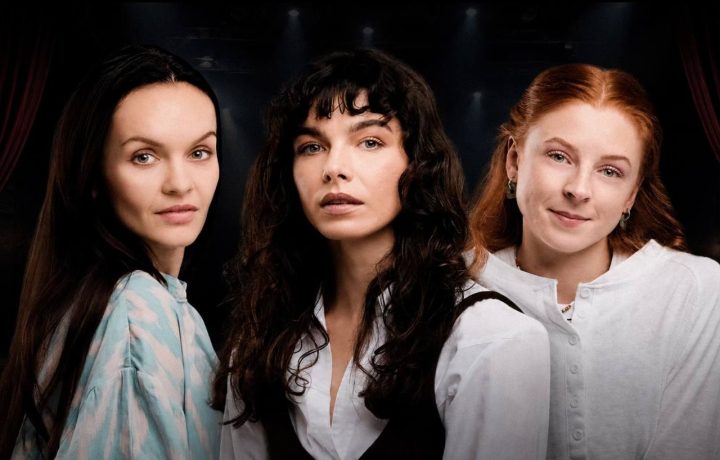
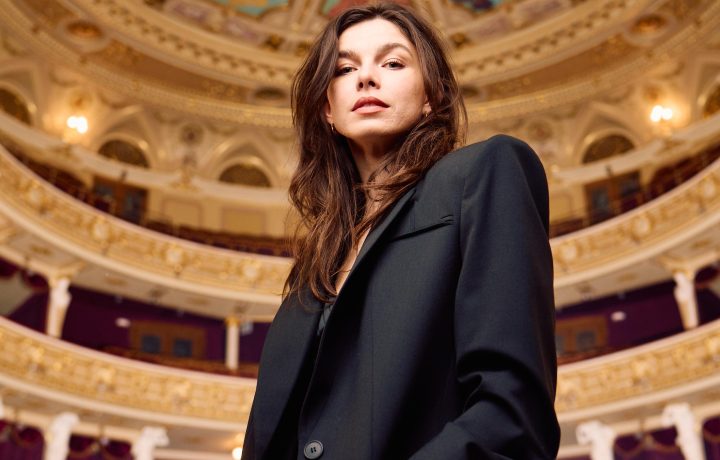
At present the part of the Countess is performed by Olena Saltykova, the theatre’s leading soloist, the only artist with a ballet background in our theatre. We have a contemporary dance theatre, so a ballet background is not obligatory, but Olena has wonderfully combined in herself all the merits of a classical ballerina — and in a short time has become entirely at home in the field of contemporary dance.
The part of Liza is performed by Kateryna Kuznetsova, a dancer of unusual harmoniousness in everything, a kind of natural harmoniousness. This is a very rare quality that cannot be cultivated — a person either has it or doesn’t.
The part of Hermann is performed by Vladyslav Detiuchenko, a very young ballet artist; he is also a wonderful choreographer, far more radical than I am, and more contemporary. I am happy that he is going his own way in this respect.
It is always very interesting to work precisely with artist-choreographers, because, willingly or not, they colour your choreography with their individuality and their vision of the world of dance, and it begins to sound different. I do not hide the fact that I make use of this, and I am happy that such half-tones and shades arise in the movement I offer them. This is a normal process, because ballet is co-authorship.
The part of Saint-Germain at the premiere will be performed by Honoured Artist of Ukraine Artem Shoshyn, also, by the way, a choreographer, and what is also interesting is that he is far more neoclassical than I am.
You often emphasise the youth of ballet artists. Yet the official duration of their creative life is rather short…
The official duration of a ballet artist’s creative life is 20 years according to Soviet canons; after 20 years of service a ballet artist retires. But if we are talking about stars of world stature, then it is first and foremost the star who decides — we know examples of ballet artists who worked incredibly long. Probably the most famous example is Maya Mikhailovna Plisetskaya.
I am very fond of older artists, but most often I work with them outside Kyiv, because my theatre in Kyiv is, in principle, a theatre of young artists. There are people I have worked with, and this is the pride of my biography: Mikhail Lavrovsky, People’s Artist of the USSR, Valery Lagunov from the Bolshoi Theatre, Viktor Barykin from the Bolshoi Theatre. Vladimir Vasiliev, a legend of world ballet, took part with me in the opening of the Olympics and danced my choreography. This is an incredible pride! They cannot, of course, perform certain virtuoso movements, jumps and lifts, but because they are personalities of incredible stature, everything they do takes on such an incredible colouring and the noble patina of true art! This is genuine genius, this is very interesting.
Besides “The Queen of Spades”, what other premieres does the «Kyiv Modern Ballet» theatre plan for this season?
I plan to create something chamber-scale somewhere in the spring, but for now I haven’t even begun the development — I need to bring out «The Queen of Spades». This is a very complex project — large both in the musical and in the technical part. I am not one of those choreographers who can prepare several projects at once; I need to finish this one and only then take up another.
If we take last year, we had the large canvas “The Little Prince”, which we brought out in the autumn, and the chamber production “Nine Dates” to the music of Chopin, which we showed already in the spring. I think it will be the same this year too.
I wish you every success!
So it shall be, because I am simply delighted with the talent of the artists of “Kyiv Modern Ballet”, with whom I am creating “The Queen of Spades”!
Liubov Baziv, UKRINFORM