“The Queen of Spades”, or punishment by eternity
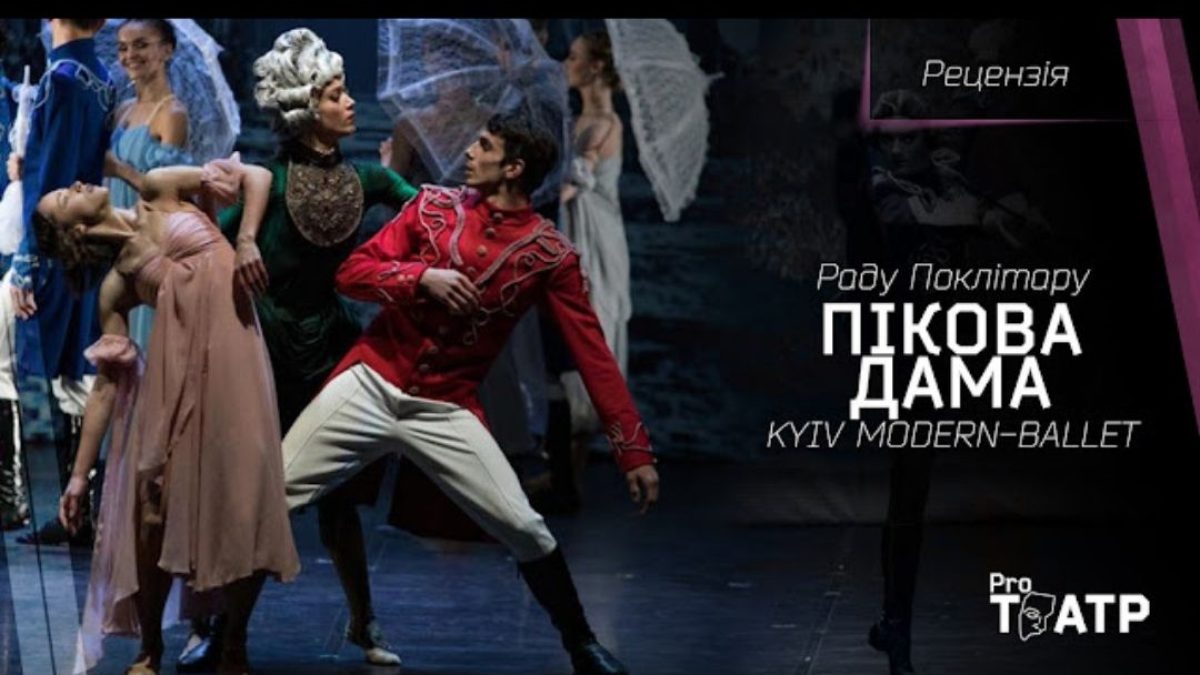
In his time, the outstanding choreographer Roland Petit created two versions of “The Queen of Spades”, both pulsars of new choreographic thought. The first time, the ballet was based directly on A. Pushkin’s work rather than Modest Tchaikovsky’s libretto, although Petit used the music of Pyotr Tchaikovsky’s eponymous opera…
In his time, the eminent choreographer Roland Petit created two versions of the production "The Queen of Spades," both of which were pulsars of new choreographic thought. The first time, the foundation of the ballet was Pushkin’s work itself rather than Modest Tchaikovsky’s libretto, although Petit did use the music of the opera of the same name by Pyotr Tchaikovsky. The second time, twenty years later, the choreographer did not reproduce but rather created anew a production on the same subject, this time using the music of Tchaikovsky’s Sixth Symphony. His "Queen of Spades" preserved above all the ideological substance of Pushkin’s work rather than the mystical-tragic resonance of the altered plot from Modest Tchaikovsky’s libretto, and it gravitated first and foremost toward a tale of Hermann’s passionate obsession with gambling.
Radu Poklitaru, as is well known, is a choreographer-storyteller who works with the vertical axis of the plot rather than with an event-by-event narrative told in the language of the body. His "Queen of Spades" is no exception, but rather becomes a timeless parable of human vices. He, too, like Roland Petit (though he creates a two-act ballet, unlike his French colleague), uses for his production Tchaikovsky’s "Pathétique" Sixth Symphony for the second act, while in the first he turns to the Second Symphony, the so-called "Ukrainian" one, which the composer wrote while visiting his sister in Ukraine.
And while there are certain questions to be raised about the temporal balance between the two acts — in particular, the dynamics of the first act are rather swift and fit within a span of roughly 20 minutes, as opposed to a second act twice as long (and although the first act is dramaturgically quite complete, a certain abrupt interruption of the viewer’s attunement is nonetheless present) — one wishes to gaze with delight upon the work’s ideational deverbalization. Radu Poklitaru hardly deforms the plot of the work at all, but his libretto makes it possible to trace how the "butterfly effect" operates in this story, thanks to the tale of the young Countess (an exquisite performance by Olena Saltykova), who is the narrative center of the first act. It is precisely this effect that explains how certain events in the past (in this case the 18th century) can give rise, in another place and another time (Hermann’s story in the 19th century), to staggering consequences. Thus, the fact that the Countess obtains exceptional knowledge of the three cards from the mystical Count Saint-Germain (Artem Shoshyn) has, conditionally, the very same effect as the appearance of Woland at Patriarch’s Ponds before Bezdomny and Berlioz in M. Bulgakov’s novel "The Master and Margarita," setting off a chain reaction. The choreographer-director endows the figure of Count Saint-Germain with an exceptional mysticism that is identical to Mephistophelean evil, which is "…part of that force which forever wills evil and forever works good." Whether it is good or not is already a question for the philosophical category of morality, but he becomes the litmus test of the heroes’ weaknesses; in particular, he captivates the imagination and the thirst for luxury of the Countess, who receives from him as a gift not only a precious necklace and the costliest of secrets, but also pays what is perhaps the dearest price, giving herself to him against her own will. This will also ultimately make her a part of that same dark force.
The times will change; only the demon-tempter Saint-Germain will continue to toss the hardest problem to be solved — "love or enrichment" — to the fervent, the young, and the weak. It is not for nothing that it is he who will play a fatal game of cards with Hermann, no longer for money but for his soul. So too, symbolically, the mirror exists onstage as a portal between worlds from the very beginning of the production, and it goes off almost like Chekhov’s gun on the wall. This element of the scenography makes a considerable impression on the viewer thanks to modern technologies that only underscore the mystical-dramatic core of the production.
The living set design once again becomes an instrument of augmented reality in Kyiv Modern Ballet’s productions, thanks to Olha Nikitina. The surrealistic interiors of ballrooms and estates with their exquisite adornments, the mystical gardens, squares, and parks, as well as the screen that places emphasis on key stage scenes and broadcasts close-ups of the players’ hands and their card combinations, allow the viewer to sense reality as if through VR goggles. The aesthetic component of the ballet is rounded out by Dmytro Kuriata’s costumes, stylized after the aforementioned centuries.
The second act of the ballet reveals in greater detail the mechanism of the "love or enrichment" game — in essence, the game of survival of Hermann (Vladyslav Detiuchenko), who will have to choose between Liza (Kateryna Kuznetsova) and the mystical knowledge of easy money. Poklitaru would not be himself if he resolved this whole story in the classical operatic manner, placing a revolver in Hermann’s hands and a repentance of love. The choreographer-director, like Pushkin, punishes the protagonist with eternal madness within the walls of an asylum for the mentally ill. The director employs a symbolic device — it is precisely the humanized figures of the three cards (Anastasiia Dobrovolska, Daria Herashchenko, Illia Miroshnichenko) who, in a telling gesture, will put a straitjacket on the protagonist.
The choreographer gives Hermann, lost in his delirium, one last chance to save himself through Liza’s love. He frees himself briefly from the shackles of madness, but the delirium and the appearance of the dead Countess’s figure drag him into the gloom — love is powerless. The final scene of utter solitude in the classic black box of the stage demonstrates the eerie grandeur of fatal obsession in this abyss of darkness — Hermann, in his own frenzy and with a coin in his hands, is doomed to eternal defeat, when the ace and the queen swap obverse and reverse — and this is unequivocally the director’s powerful coda.
Review: Dasha KASHPERSKA