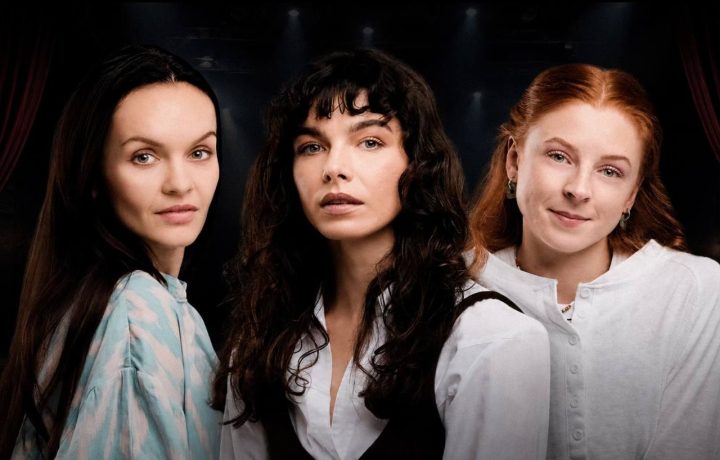
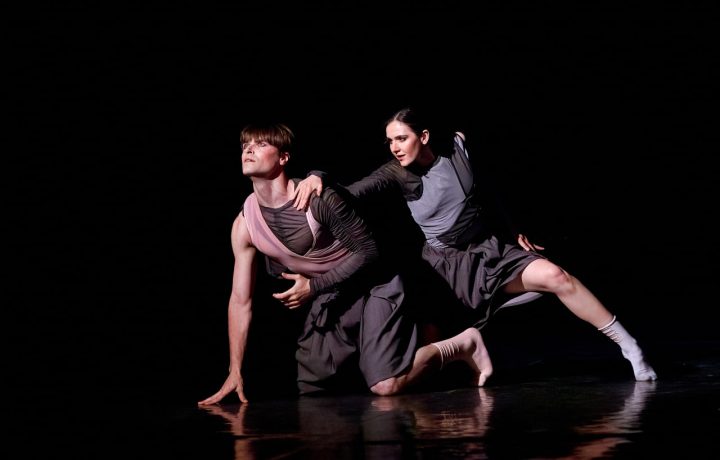
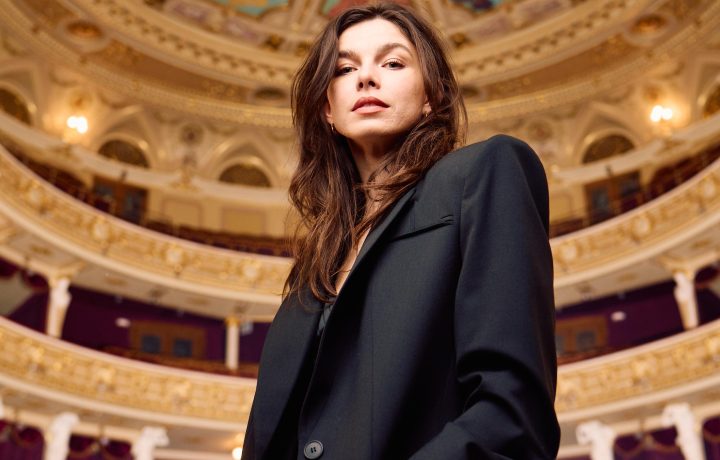
“The key idea is the inner strength of a person,” — Kateryna Kurman on the ballet “Alice Through the Looking-Glass”
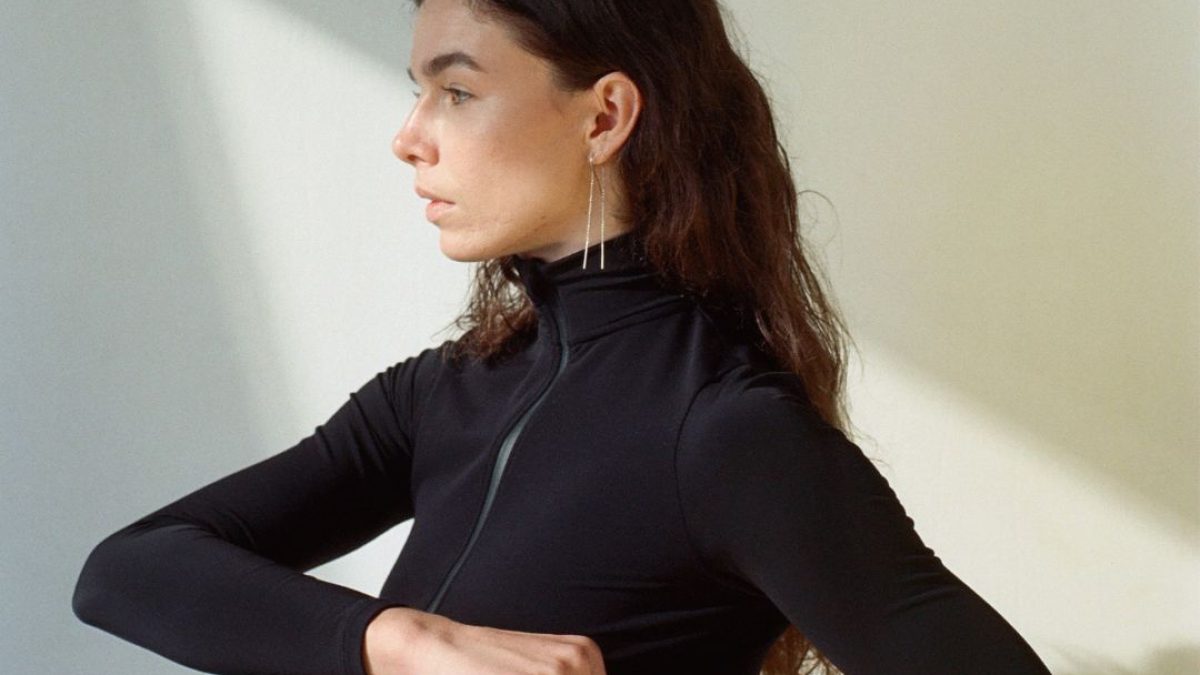
On November 30 the “Kyiv Modern Ballet” theatre will present in the capital a production based on the famous work by Lewis Carroll.
At the heart of the new ballet lie the captivating adventures of Alice in the whimsical world of teenage dreams, where she meets the Queens, the Hatter and other fairy-tale characters. The girl searches for who she is and what her identity is, getting to know herself through others. The world around her changes — what remains unchanged is Alice’s love of life and her thirst for knowledge, which ballet artist Sofiia Husieva conveys through dance.
A creative team worked on the production. Ukrainian composer Ivan Harkusha (John Hope) wrote the music, costume designer Dmytro Kuriata developed an innovative vision for the stage characters, and set designer Danylo Vasylenko created the striking scenery.
Choreographer Kateryna Kurman told “Vechirniy Kyiv” more about the production.
— Tell us how the idea came about to stage “Alice Through the Looking-Glass” in particular? And not, for instance, “Alice in Wonderland”.
— The idea of staging a ballet based on “Alice Through the Looking-Glass” was not my own initiative. One day I received a call from Dmytro Kondratiuk, who is the curator of this project, and he said he had an offer I simply would not be able to refuse. At that moment I was in Odesa, and, intrigued, I asked what it was all about. Dmytro said: “We’re staging Alice.” I replied: “Let’s do it!”
That same evening, as I was leaving Odesa, an acquaintance gave me two books as a gift — “Alice in Wonderland” and “Alice Through the Looking-Glass”. It was pure coincidence, but in that moment I felt it was a sign of fate, and that I was simply obliged to take on this project. So the choice of “Through the Looking-Glass” was no accident — it was as if the work itself had found “Kyiv Modern Ballet”.
Why “Alice Through the Looking-Glass” specifically? In my view, this work is more relevant to our time. It explores themes of inner transformation and the gap between reality and fantasy, which resonates especially with the modern person, who is searching for themselves in a constantly changing world. This story opens up more room for deep reflection and symbolic imagery.
— What is the central idea of this production that resonates with you?
— In this production, I would place the main emphasis on Alice’s inner journey. Her desire to find her place in the world is what resonates with me most. She is seeking grounding — that is, she wants to find inner peace and a sense of belonging. The world she finds herself in is distorted and ambiguous, which reflects our reality, where there are no clear boundaries between black and white, where there are many shades of grey. We ourselves shape this world through our actions and thoughts, and in our hands we hold the power to create the life we want.
In addition, the key idea of the ballet is the inner strength of a person. Each of us is capable of overcoming all the difficulties on our path, but first we must conquer ourselves, learn to master our fears and find harmony in this chaotic world. This is exactly what Alice tries to do on her journey, and it is what makes her story so relevant to each of us.
— What are the distinctive features of the choreography? As the description states, each dance element will not merely depict the action but will serve as a visual metaphor for revealing the characters’ deepest psychological states.
— Yes, each character is a unique individual, and that individual has two dimensions — the real and the imagined, as Alice sees them. These two versions of one and the same character can differ radically, and it was precisely this that became the key element in my search for a choreographic language. In the real world a character is endowed with certain qualities, but in Alice’s imagination they are transformed, taking on a different meaning. My task was to convey these inner changes through dance.
For example, we have the Teacher — a complex character who, one might say, has a split personality. In reality she is a teacher, but in Alice’s imagination she becomes both the White and the Red Queens at once. The White Queen is the embodiment of wisdom, control and kindness, whereas the Red Queen is a passion for power. The challenge was to portray these two opposite essences within a single character through bodily movement. That is how we found a choreographic vocabulary that reflects this duality, playing on the contrasts and transformations between these images that exist in Alice’s mind.
— Which iconic characters from the work, besides Alice, will we see in the ballet?
— The Hatter, though his character will be somewhat different. Also on stage will be Tweedledum and Tweedledee, and the White and Red Queens. The Caterpillar will remain as well, but we have added new characters to her image — Henchmen, who will help expand this character’s role.
As for the Rabbit, we decided not to include him in the production. These changes allowed us to delve more deeply into individual aspects of the story and to introduce new visual and dramatic solutions while preserving the spirit of the original work.
— You are the author of the libretto, and the music for the ballet was written by Ivan Harkusha. How did your collaboration unfold, and what were your wishes?
— Our collaboration with composer Ivan Harkusha took place both online and offline. We are in constant contact, and it sometimes happened that we wrote music even late in the evening, in real time.
One of the greatest advantages is that Ivan takes a very individual approach to each character. He explores in depth the psychological image of each one, searching for a unique sound that would reflect their inner state. This allows the music not merely to accompany the action but to fully convey the emotions and depth of each character.
The first act of the ballet was difficult, because every musical composition has to carry the plot. A single act may contain five or six separate stories, and each of them requires clear musical expression. It is no easy task to create music that is at once comprehensible, profound and in keeping with the psychological state of the characters.
The music Ivan writes is contemporary Ukrainian electronic music, which makes our production especially interesting and relevant. It most closely resembles the characters themselves, their worlds and their emotions. It is music that will reflect what we want to convey on stage — both I, as the author of the libretto, and Ivan, as the composer.
— Tell us more about the set design. The chessboard is present in the original work. Is this or are other symbols traceable in your ballet?
— The set design of our ballet is built around the image of a labyrinth — a labyrinth of imagination, fantasy and the inner world. It is a metaphor for the way our consciousness often creates complex and tangled routes that we need to navigate in order to understand ourselves. The labyrinth is the central symbol of the whole performance, and it reflects Alice’s journey through her inner conflicts and her search for an answer to the question “Who am I?”
As for the chessboard, the second act will indeed allude to the image of a “chessboard”, where each character plays their own “game”. At this stage, Alice must overcome external and internal circumstances in order to win the match and become a “queen” — but a queen of inner peace, confidence and light. It will be a kind of struggle for one’s own place in the world and for harmony within oneself.
— This is your first major production for Kyiv Modern Ballet. What do you find most difficult in working on it, and what are the challenges?
— The greatest challenge for me is the constant confrontation with myself. With each day, as the premiere draws nearer, the challenges keep growing. My mind is constantly working in solution-seeking mode, which, on the one hand, is very interesting, but on the other hand demands enormous concentration.
One of the most difficult aspects was working without finished music. Often we had to create choreography while the music was still being written. I would find references, search for music that could convey the mood of a character or a scene, and we would set the dance. Then, when the final music appeared — written on the basis of videos from our rehearsals — we had to set the dances to the music. This is double the work, because sometimes the new music changes one’s perception, and certain moments require correction, refinement or even complete reworking. This process could slow the work down, but it also opened up new horizons for creativity, and that is exciting.
Another challenge was adaptation — both of the artists to me and of me to them. And yet, were it not for the artists, this project would not have been possible. They are wonderful, and their dedication is inspiring.
Among the practical difficulties, one can single out working with the scenery. We have large, large-scale sets, but, unfortunately, we are able to work with them only four times because of the limited access to the stage of the IICMC. This adds pressure, but at the same time it motivates us to make the most efficient use of the time we have on stage.
The ballet in two acts “Alice Through the Looking-Glass”
Mariia Kataieva