Radu Poklitaru: on ballet stereotypes, music and a contemporary “Little Prince”
On October 21 Ukrainian audiences were able to see a new staging of the ballet “The Little Prince” based on the eponymous novella by Antoine de Saint-Exupéry. Between rehearsals, KyivVlast managed to talk to the choreographer and learn how a favourite childhood fairy tale turned into dance.
Radu Poklitaru — a renowned choreographer, Honoured Artist of Ukraine and the founder of the Kyiv Modern Ballet theatre
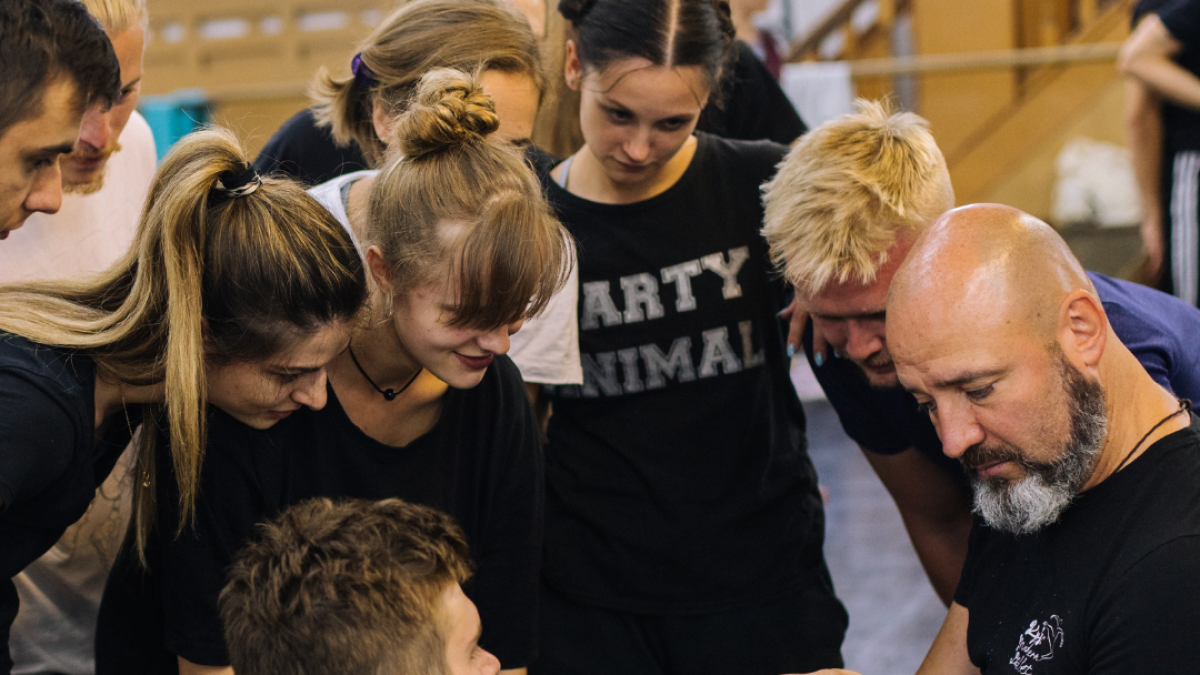
Choosing the music, rehearsals, working on mistakes — that is roughly the rhythm in which the preparation for the launch of a new dance project by Kyiv Modern Ballet is proceeding. Its mastermind and director, Radu Poklitaru, is making the final adjustments before the premiere.
We got in touch with Radu on his way back from Kharkiv, where the choreographer and his dancers had congratulated the great Ukrainian ballerina Svitlana Ivanivna Kolyvanova on her anniversary. However, the work continues even on the road.
“Literally a few minutes before your call, I was reviewing a recording of the rehearsal and making notes. There were 68 remarks for the 18 minutes of the first act,” the choreographer shares.
Radu laughs and asserts that this is perfectly normal and that everything can be fixed. The choreographer also talks about his favourite stages of the work:
“I have two favourite stages of work. The first is creative, and the second I would call more routine, but I get no less pleasure from it. I love the period when it is just me and the computer. In a separate folder I write down my thoughts on the project, choose the music and lay out the plot, independent of the human factor. But that is an ideal performance, one that takes shape in my imagination. In reality, it keeps changing all the time. At the same time, I really love the day when I do not need to take part in the rehearsal. All that is left for me is to work on the finished material.”
Despite the tight schedule and the quarantine restrictions, Kyiv Modern Ballet is working in its usual mode. But Radu admits that the pandemic has nevertheless affected the preparation for the premiere.
“We have a very compact ballet company, just 22 artists. Accordingly, the premiere depends directly on the health of every member. We make sure that the rehearsals are as safe as possible for all of us.”
An exceptional discipline always reigns at the ballet rehearsals. So we asked Radu whether he could be called a strict teacher.
“I am not a teacher — I am a choreographer,” Poklitaru smiles. “I admit that over the years I have become gentler, because I work in a company of like-minded people. We enjoy the utmost creative freedom — everyone can put forward their own ideas and bring them up for discussion.”
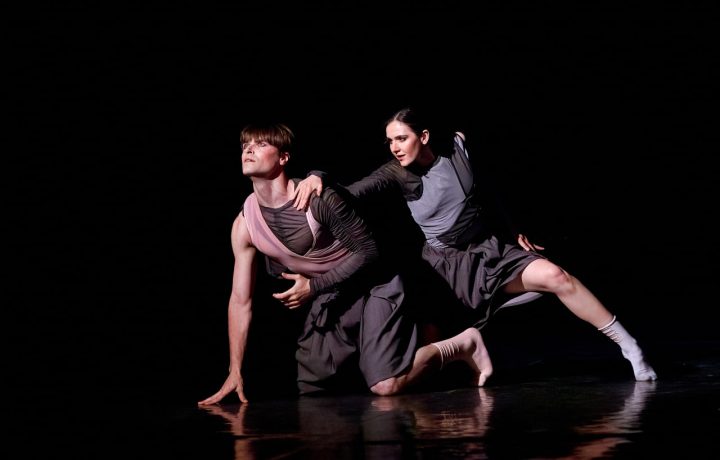
The ballet “The Little Prince” offers audiences the transformation of a literary work into dance. Together with Radu we try to find out just how this transformation happens.
“It is impossible to translate every single word into the language of choreography; there is no single recipe for that. After all, dance speaks to the audience through emotions. In this case choreography works as a universal language that sometimes says more than ordinary words.”
One of the distinctive features of the new ballet “The Little Prince” has become its musical accompaniment. The production features the music of the young Mozart and Ukrainian lullabies.
“The music of the 8-year-old Mozart has always amazed me. Listening to it, you cannot say that the composer is a small child. Initially I wanted to use this music for a ballet about childhood — a time that elusively slips away from us. But suddenly it dawned on me! Little Mozart is the Little Prince himself. The Ukrainian lullabies became excellent contrasting music that also evokes the theme of childhood.”
Radu Poklitaru also told us what would surprise the Ukrainian audience about the ballet.
“My Little Prince is a combination of original choreography, light, projections, sound and stunning music. I deliberately did not make any drastic changes to the work as I moved it into the realm of dance. After all, for me, drawing close to “The Little Prince” is in itself an anxious happiness.”
Radu himself notes that over time he has come to feel like a spectator and a choreographer in equal measure.
“At the premiere I know for certain that there is nothing more I can do. On stage the performance belongs to the artists. All that is left for me is to watch from the sidelines.”
Towards the end of the conversation, we asked Radu to dispel the existing myths about ballet and dancers.
KV: All successful dancers begin studying ballet in early childhood. True or a myth?
Radu Poklitaru: There are no guarantees that a person will become a ballet star if they begin training from an early age. And at the same time, there are cases when successful dancers started training at 16. In my opinion, the golden mean is 10 years old.
KV: Ballet dancers must necessarily be thin.
Radu Poklitaru: Dancers of academic ballet must necessarily be fit, because that is inherent in the aesthetics of classical dance. Nevertheless, no one forces anyone to keep to a strict diet, since ballet is energy-consuming as it is. And dancers are thin because all the calories are burned off over the course of the working day.
KV: Ballet dancers retire early.
Radu Poklitaru: A dancer may retire after 20 years of service — that is true. It turns out that at 40 a person can become a pensioner. That is why artists think in advance about what they will do after their dancing career. Many continue to work as teachers and choreographers, while others master new professions.
KV: What about the “broken glass” in pointe shoes? Is the competition in ballet companies fierce?
Radu Poklitaru: Competition exists in any company. In the theatre it is aggravated by the emotional strain as well. But in our theatre it has never come to broken glass in the pointe shoes (smiles).
KV: Is ballet only the classics in the spirit of “Swan Lake”, or something more?
Radu Poklitaru: Today contemporary dance is becoming part of the culture. Our Kyiv Modern Ballet is living proof of this. The public needs this form of art. But that does not mean that academic ballet is no longer relevant. So ballet classics will always be in fashion.
Natalia Hrynchenko
KyivVlast