Why does humanity stubbornly step on the same rake?
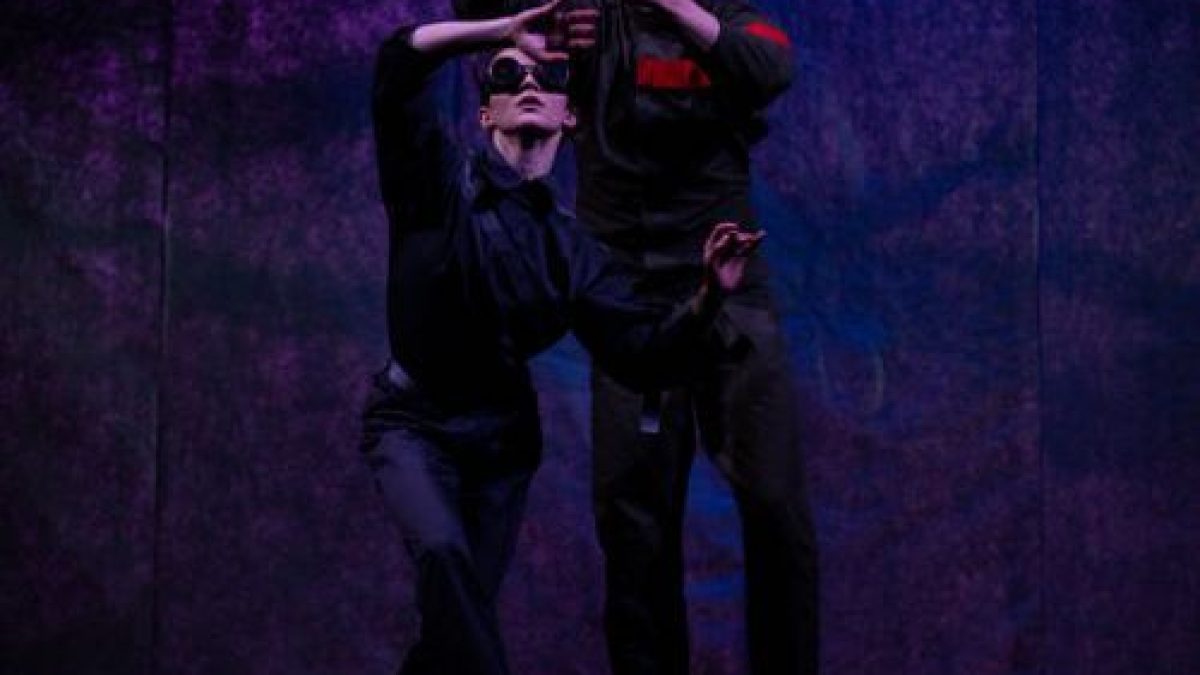
Kyiv hosted the premiere of the dystopian ballet “1984. Another” based on George Orwell’s novel.
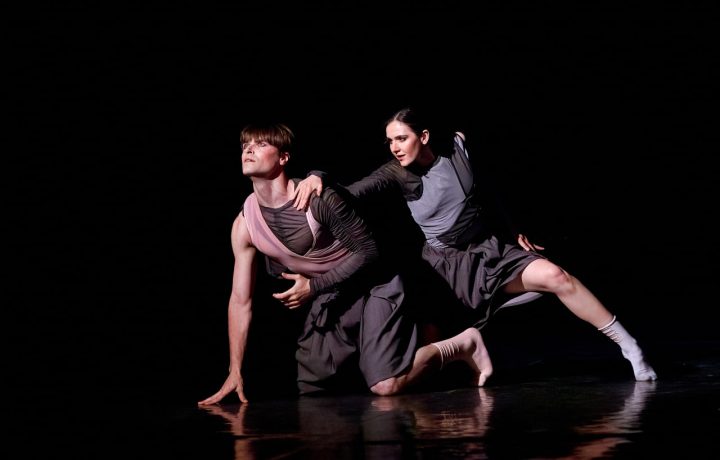
The performance, set to music by Hildur Guðnadóttir and Hauschka, was staged by “Kyiv Modern Ballet” soloists Illia Miroshnichenko and Kateryna Kuznetsova. They presented their premiere on the stage of the Kyiv Opera.
This choreographic reading of a cult literary story is the quintessence of the plot and the novel’s leading thesis about the confrontation between the individual and the system. The protagonists are nameless and schematised in order to mark the ideological poles: belonging to, or marginalisation from, the global value system imposed by totalitarianism. Numerically they are as if set against those 85% of the mindless mass (the proles) defined in Orwell: nine “Kyiv Modern Ballet” artists take part in the show — He and She (Illia Miroshnichenko and Kateryna Kuznetsova) against All — Vladyslav Dobshynsky, Kateryna Kurman, Roman Kushnerevych, Oleksandra Maksymchuk, Valeriia Melnychuk, Violetta Petrolai and Dmytro Pohribnichenko.
The young creators articulate quite clearly the anxious unease connected with the processes of today, which are in tune with the events of the novel. When the “mono-majority” of the 21st century is no different from the 85% of Orwellian totalitarianism. As their main theme they define the thesis: “if you are in the minority — even alone — it does not mean you are mad.” Intuitively or declaratively, they overlay the utopian picture onto harsh reality and, with horror, see that the parameters are identical. That humanity stubbornly steps on the same rake. With their dystopian ballet the creators tried to give their own answer to the questions voiced by Orwell, promised an unexpected finale, but no miracle happened — the system won again, ground down the individual…
“‘1984. Another’ is, above all, our response to the eternal problems of the individual’s existence within the social order and society as such,” the young choreographers declare. They posed the eternal question: “Will you find in the hearts of others that long-forgotten feeling — love?” The answer is the same: love exists, but it is powerless where the idea dominates. Love is sacrificed for the great idea of universal love, almost idolatry…
The creators did not burden themselves with a libretto, limiting themselves to basic and mostly rhetorical questions, which has already become the norm for productions of small contemporary choreographic forms. “People are ghosts, people are empty shells leading their aimless existence on the edge of reality and the dictator’s imposed will. Their life is a self-sacrificing deception in which they find their salvation, their faith, their truth. But what will happen to them if the deception is suddenly revealed? Whose side will they choose?” ask Illia Miroshnichenko and Kateryna Kuznetsova. Choreographically this is depicted by means of contemporary dance, in which one might suspect improvisation, were it not for the sudden freeze-frames that look like fixed ideologemes, were it not for the lyrical duets that break, like breakwaters, the tsunami of the mass’s purposeful movement, were it not for the well-coordinated inclusive work with thoughtful set elements, with props (scenographer — Volodymyr Chumachenko), with light, which plays a decisive role in the development of the plot (lighting designer — Olena Antokhina). The Orwellian screen is aptly treated, used for the benefit of the system to control both Party members and the mass: in the show it is made of paper, it broadcasts distorted, bizarre pictures imposed on the deceived audience; it turns out to be easy to destroy, and the light of truth becomes invincible — which cannot but please, though it remains a utopia.
The musical material is selected and used 100%. The creators admit that it was “the music that gave the impulse to the idea, and only then did the idea set the necessary rhythm: these concepts are in inseparable interaction with each other in the show,” for which one can congratulate the ambitious debutant creators, who took on a difficult theme accompanied by complex music (sound designer — Oleksandr Kurii).
The show is intended for a more or less prepared audience. So whoever is familiar with the source is able to trace the set of theses chosen for their movement and scenographic “voicing”. The novel was, as it were, taken apart into quotations, to which sets and props were tied (glasses, chains, spotlights, conditional concrete block-cages) and firmly bound to movement. Orwell: “The Party told you to reject the evidence of your eyes and ears. It was their final, most essential command.” With exactly the opposite, blindness and deafness in the show are ascribed to the marginalised. Interestingly, to show the heroine’s blindness they chose a welder’s goggles, which perhaps makes the heroine blind to the blurred spectrum familiar to all, yet protected and ready for the piercing, deadly light of truth. The deafness of the hero, who is simply called He, is global: in the end he turned out to be deaf to the main thing — to the love that gave him a chance to break beyond the limits set by the system. Orwell: “We shall meet in the place where there is no darkness…”. No, the broken hero is unable to come out of the darkness, he loses to the system: “…surrendered in mind, but hoped to keep the soul inviolate.” It does not happen that way: “Just give up — everything else follows from there. It is like swimming against the current — no matter how hard you try, it carries you back — and suddenly you decide to turn and swim with the current and not fight it. Nothing has changed, only your attitude to it: what is to be cannot be avoided.”
And yet the discerning viewer always awaits catharsis, even where it is a priori not planned. The heroine, betrayed, thrown to the mercy of the majority whose life is a self-sacrificing deception in which the mass finds its salvation, its faith, its truth. And yet She is already cleansed by the radiance of truth that the renounced hero is unable to destroy: neither will nor cartridges will suffice! Orwell’s hero was ready to give his life: “To die hating them — that is freedom.” This sacred right the creators leave to the heroine: She, the Other, will have to continue the path herself, or perish. As in Orwell… Well, in the end, freedom is feminine in gender.
Larysa Tarasenko
Details: Den, No. 21 (2020)