"I live and work in Ukraine because it is my creative home," — Radu Poklitaru
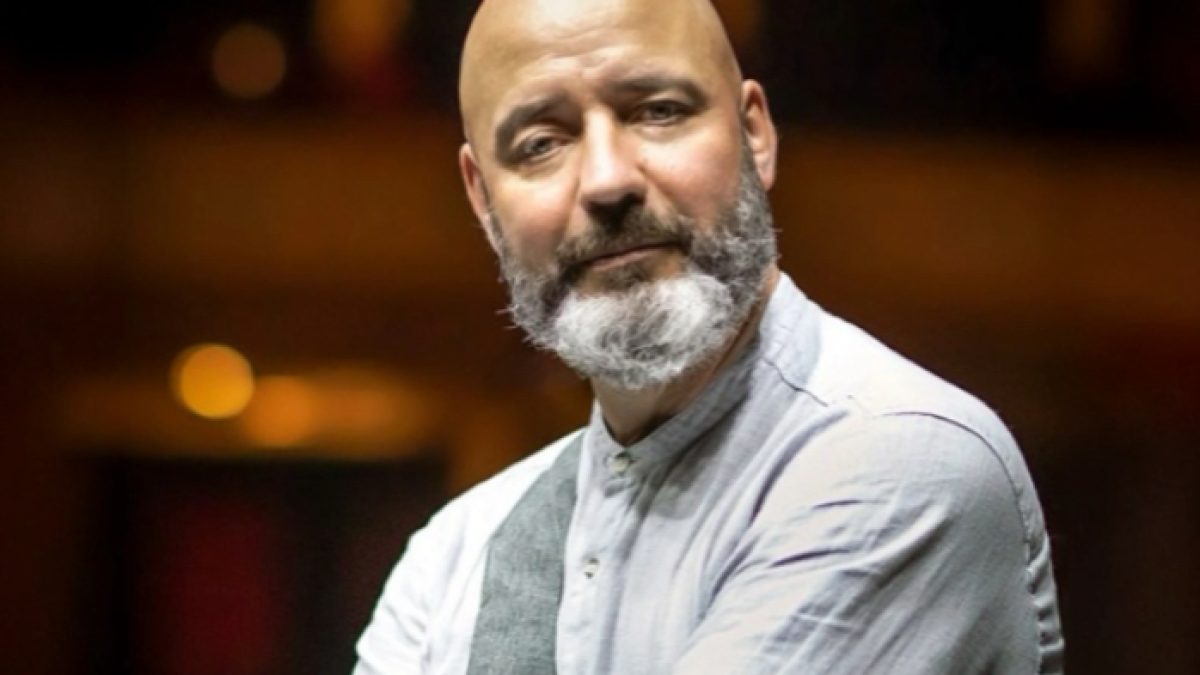
On the eve of the premiere of the ballet "La Traviata", which will take place on October 16 and 17, Kyiv Post met with choreographer and chief ballet master of the Academic Theater "Kyiv Modern Ballet" Radu Poklitaru.
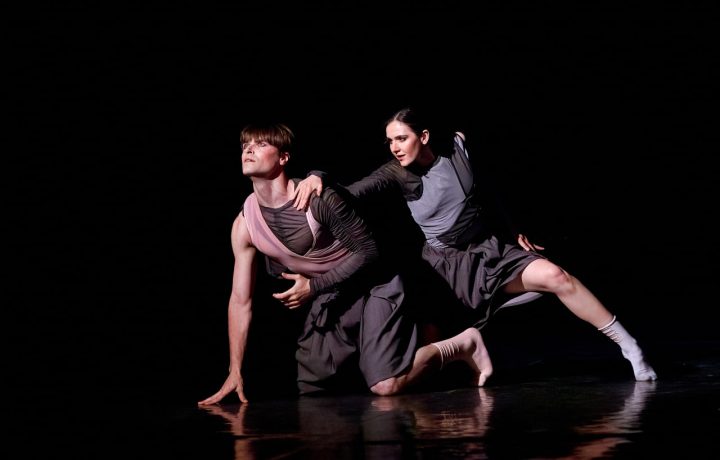
«La Traviata» is a new authorial version of the renowned musical work by Giuseppe Verdi, which Radu Poklitaru has created in his own distinctive style.
Poklitaru is one of the most prominent figures on the choreographic map of Ukraine, Europe and the world. A laureate of the Taras Shevchenko National Prize of Ukraine and of numerous international competitions, he is the author of more than forty one-act and full-length productions staged on the stages of Ukraine, Moldova, Latvia, the Czech Republic, Serbia and other countries.
His productions have been presented with great success at international music festivals and on tour in the United Kingdom, France, the Netherlands, the USA, Japan, China, Poland, Estonia, Thailand, Spain, Norway, Turkey and other countries.
Kyiv Post (KP): This season the Kyiv Modern Ballet theatre is marking its 20th anniversary. As its founder, which key milestones or features would you single out?
Radu Poklitaru (RP): Let me start with something simple. Looking back, I realise that this theatre will most likely become the greatest work of my life. For me it is like a child. I have lived through every stage with it, so it is hard to single out individual “milestones”: every period had its own advantages, its own charm and, at the same time, the inevitable growing “pains.”
This is true both of a living child and of the creative ensemble of Kyiv Modern Ballet. I accept the theatre in its entirety — with its shortcomings and its discoveries, with the brilliant insights of individual artists and the daily labour of the company. I love it the way parents love a child: not for being perfect, but for its ability to grow.
KP: What major metamorphoses have you undergone over these 20 years? And could you comment on a thought you expressed in one of your recent interviews: “The most important struggle for me is the struggle with myself”?
RP: Looking back over these two decades, I can name the main metamorphosis quite simply: I have grown twenty years older. Is that good or bad? I am probably now at an age when I have enough experience and skill, but I am not yet “weighed down” by the inertia of ageing.
That is why the projects that now come “from my pen” seem to me far more mature in terms of artistic quality than what I created earlier. Like many artists, I am not especially fond of my early works, yet there are productions that are still alive twenty years on.
Take, for example, our very first “swallow” — “Carmen.TV.” This production is still vivid: dancers who had not even been born when it was created now find roles in it — and with their arrival it sparkles with new colours. It is a fascinating process.
At the same time, with the years it has become ever harder for me to begin a new production. When I come to the ballet studio for the first rehearsal, the very first thing I do is struggle with myself — with everything that has already been done over these years.
I have never counted how many productions I have created, but there are quite a few. And at the start of each new work I literally “fend off” the clichés prompted by my all-too-obedient memory. And a cliché, even if it is my own, is a bad thing. I want to invent, not to repeat myself.
In truth, the creative life of a choreographer is a constant journey towards inventing and perfecting one’s own plastic language — its refinement, its uniqueness, its originality, its capacity for metaphor. I do my utmost to follow this path, but the main obstacle on it is myself.
That is why the phrase “the most important struggle for me is the struggle with myself” is not a fine metaphor but the real driving mechanism behind the creation of each of my new productions.
KP: What challenges does the theatre of contemporary ballet face today because of the war?
RP: They are the same as for everyone who has remained and is living in this country during the war. First and foremost — psychological ones. We seem to have learned to coexist with the reality of war, but that is very relative: you can see how hard it is for people to endure emotionally what is happening.
That is why, during rehearsals — both of new productions and of works already well known — I consider my main task to be creating an atmosphere of creative unity and joy. More smiles, more positivity, because there is already enough negativity: you only have to open the news feed to be reminded of the reality we are living in.
I am not a psychologist, but I feel responsible for the microclimate of the ensemble — for ensuring that an atmosphere of creativity is preserved in the studio. Right now this is the most important thing for me.
If we are talking about practical problems, they coincide entirely with the difficulties society is going through. A large team works to create a production, and every specialist in it matters.
For example, in the technical side of things — where the video content is created under the direction of Olha Nikitina — we have felt how hard it is today to find the specialists we need. The same goes for the technical staff.
As for the company, we have unfortunately suffered certain losses in our roster: after the adoption of the well-known law, some of the young men took the opportunity to leave. I am not blaming anyone, but we had to hold castings, selections and competitions at short notice.
At present we have a full roster of artists, yet the arrival of new people means training from scratch. You cannot simply walk in “off the street” and immediately integrate into an ensemble with its own aesthetics and philosophy, formed over years. It takes time.
In any case, life goes on. Kyiv Modern Ballet continues to work — despite all the difficulties that arise on our path.
KP: Which of your theatre’s productions, created during the war, have become landmark works for you — and why?
RP: I am cautious about the word “landmark” when it comes to my own productions. To call yourself the author of a “cult” work is already beyond the bounds of good taste and professional modesty. So I will put it more simply: during the war we have created a good many new ballets, and they are all very different.
I may forget something, but let me name a few. “Tomorrow” — a plotless, neoclassical, light work set to the music of Frédéric Chopin. “DiscrimiNATION” — an attempt to make sense of various forms of discrimination, set to the music of George Frideric Handel and Valentin Silvestrov. “Alice Through the Looking-Glass” — a production by Kateryna Kurman, a young choreographer making her debut in that role. I am glad we were able to give her the “green light.” She is a leading soloist of our theatre and now, in essence, has two professions: that of a dancer and that of a choreographer. “On the Beautiful Blue Danube” — utterly unlike anything I have done before. It is essentially a vaudeville, a comedy of situations with disguises and amorous intrigues set to the music of Johann Strauss.
Outwardly it is a cheerful and “undemanding” production, but in reality it is very carefully thought through. We wanted audiences to be able, for an hour and a half, to forget that beyond the walls of the concert hall a war is going on: to smile, to laugh, even to weep together with the characters. It is a kind of “ballet therapy.”
And now, “in the home stretch,” there is “La Traviata.” It is not directly connected with the war, since there is little “pure journalism” in my choreography. And yet the production still echoes with reverberations of what we ourselves are living through. This is inevitable — because the war is happening to us, its creators, as well.
Is it worth calling these productions landmark works? Let the audience and time decide. My task is to work honestly and to create premieres that help people not to lose what is human in the circumstances in which today’s audience lives.
KP: Your new ballet “La Traviata” is a choreographic drama, a new reading of Giuseppe Verdi’s famous musical work. Why has precisely this work become a source of inspiration for you today?
RP: For me, “La Traviata” is above all a song of love. And at the same time, it is a song of my own love for Giuseppe Verdi’s great opera, a love that took root back in my childhood. I used to go with my parents to the Chișinău Opera and Ballet Theatre, stand in the wings and listen to “La Traviata.” Back then, of course, I did not yet understand what it was about, but even then the music enchanted me. Perhaps the roots of this feeling lie precisely there.
Why this particular work, and why now? We have entered the twentieth, anniversary season of the theatre, and I wanted to draw an invisible yet powerful artistic arc across these two decades. “La Traviata” struck me as the ideal refrain for everything that has happened with Kyiv Modern Ballet over these twenty years.
We are creating a choreographic drama based on an audio recording of the opera. It is not a new symphonic work but precisely Verdi’s original vocal-symphonic score.
The drama of this story extends far beyond the theme of “obstacles to love.” For me it is a hymn to self-sacrifice, to the longing to give oneself to love, to make great sacrifices for the sake of another person.
It is in this strength of the heroine, Violetta, that the reason lies why a Parisian courtesan became a symbol of love rather than of venality. This is very important to me. And I hope that, after watching our ballet, this feeling will become important for the audience who will be there beside me, too.
KP: How, in your view, does theatrical diplomacy work today? What contribution does Kyiv Modern Ballet make to the development of Ukraine’s cultural diplomacy?
RP: Our touring schedule has been considerably curtailed of late. There are several reasons, but the main one is that it is difficult to obtain permission to travel abroad for men of conscription age. And a ballet company, as you can imagine, consists mostly of young men. So we do not go abroad often, although we would, of course, like to do so more frequently.
Despite this, we have nonetheless taken several important steps in the sphere of cultural diplomacy. We performed in Latvia at the anniversary festival of the outstanding composer Pēteris Vasks, where our new ballet “Friends” was also presented. In addition, we took part in a large gala concert at the National Opera of Moldova.
That is all for now, but I hope that in the future we will manage to broaden the geography of our travels and present Ukrainian contemporary ballet in new countries.
KP: You are a man of the world, yet on principle you continue to live and work in Ukraine. What does Ukraine mean to you today?
RP: I live and work in Ukraine because it is, first and foremost, my creative home. Kyiv Modern Ballet is the main brainchild of my life, and I am almost certain that nowhere else in the world would I have the chance to create anything like it.
My creative family and my home are in Kyiv, at Kyiv Modern Ballet. That is why, despite all the difficulties, I consciously spend most of my time right here — in Ukraine.
KP: What would you wish for yourself in the creative sphere over the next twenty years? And what would you wish for Ukraine and the world?
RP: In creative terms, it is hard for me to wish anything for myself. What I want most is to preserve my creative potency — that is probably the chief phobia of every true artist.
To doubt oneself, to feel a certain insecurity at all times — that is, in my view, even useful. Because when a person is convinced that they create nothing but masterpieces, then, most likely, as an artist they have already ceased to develop.
As for Ukraine and the world — there is only one wish, and it admits of no alternatives: peace. Peace in our country and throughout the whole world.
Myroslava Makarevych